Packing for Long-Term Storage: How to Avoid Common Mistakes
Moisture, improper packing materials, and poor unit organization are among the most common causes of long-term storage damage. In most cases, the damage goes unnoticed until items are unpacked months later.
That delayed discovery is what makes packing for long-term storage fundamentally different from packing for a move. A poorly packed moving box fails quickly. A poorly packed storage unit fails slowly and silently: cardboard weakens under sustained humidity, fabrics develop mold in sealed plastic, and wood warps under unrelieved pressure over weeks and months. By the time you open the unit, the damage is often irreversible.
This guide covers the most common packing mistakes to avoid and the practical packing tips for long-term storage that ensure your belongings stay protected throughout.
Why Does Long-Term Storage Damage Items That Short-Term Storage Doesn't?
Short-term storage is forgiving. A few weeks in a standard unit won't ruin most items, even if the packing isn't perfect. Long-term storage is different because the same environmental stresses that are harmless in the short term become cumulative over months.
Temperature fluctuations cause condensation inside sealed containers. Humidity above 60% creates conditions for mold growth, and at 85% relative humidity, mold can develop in as little as 7 to 9 days. Physical pressure from stacked boxes increases steadily as cardboard absorbs moisture and softens. Items packed without breathable materials trap moisture against surfaces, and the damage compounds with every passing month.
What Are the Most Common Mistakes When Packing for Long-Term Storage?
Mistake 1: Using the Wrong Packing Materials
Standard cardboard boxes are fine for short-term storage. For how to pack for long-term storage, they are a liability. Cardboard absorbs moisture, weakens under sustained humidity, and attracts pests. Once the structural integrity of a box fails, everything stacked on top of it is at risk.
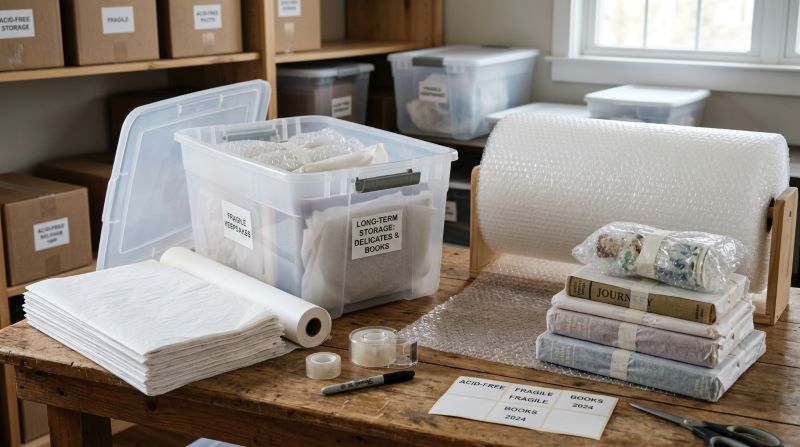
For long-term storage, replace cardboard with rigid plastic bins that have tight-fitting lids. They don't absorb moisture, stack cleanly, and protect contents from humidity and pests consistently over time. Corrugated cardboard remains acceptable for books and dense flat items where plastic bins are impractical.
Mistake 2: Overpacking Boxes
A box packed too tightly compresses fragile items, stresses box walls, and creates pressure points that cause cracking, breaking, or warping over time. It also makes boxes heavier than they can be safely stacked.
Keep boxes to a manageable weight: no more than 30 to 50 pounds for medium-sized boxes. Pack heavier items in smaller containers and fill any gaps with packing paper rather than adding more items. A box that rattles slightly is better than one that's jammed shut.
Mistake 3: Failing to Label Boxes Properly
Unlabeled boxes in a storage unit become a retrieval problem the moment you need a specific item. Searching through stacked boxes disturbs carefully organized arrangements, exposes items to handling damage, and extends every visit.
Label each box on two adjacent sides, not just the top. Stacked boxes hide top labels entirely. Include a brief contents description and any handling notes such as "fragile" or "this side up." A simple spreadsheet or phone note that maps box contents to unit location saves significant time on every return visit.
Mistake 4: Not Taking Special Care of Fragile Items
Fragile items need more than a "fragile" label. Without proper internal cushioning and individual wrapping, glassware, ceramics, and delicate objects crack and chip as contents settle over time, even without any rough handling.
Wrap each fragile item individually in packing paper or bubble wrap. Fill every empty space inside the box with cushioning material so nothing can shift. Place fragile boxes at the top of stacks and never stack other boxes on them.
Mistake 5: Neglecting to Clean Items Before Storage
Storing items that are dirty, damp, or carrying food residue creates predictable problems: mold, odors, pest attraction, and staining that deepens over months.
Clean and fully dry every item before it goes into storage. This includes appliances (remove food debris and moisture), upholstered furniture (vacuum thoroughly), clothing (launder before packing), and hard surfaces (wipe down and dry completely). Items packed while even slightly damp will trap moisture inside their containers for the full duration of storage.
Mistake 6: Storing Items in Improper Locations Within the Unit
Where items are placed inside the unit affects both their safety and your ability to retrieve them. Boxes and furniture placed directly on the floor are exposed to condensation from concrete, which absorbs and releases moisture regardless of climate control. Items packed against walls are similarly exposed.
Elevate everything on wooden pallets or wire shelving. Leave a few inches between large items and the unit walls. Place frequently accessed items near the front and heavier items at floor level. Fragile and climate-sensitive items belong furthest from the door where the temperature fluctuates least.
Mistake 7: Ignoring Temperature and Humidity Control
The assumption that any enclosed unit is adequate for long-term storage is one of the most costly mistakes in packing for long-term storage. Standard units in most U.S. climates experience summer interior temperatures above 100°F and winter lows near freezing. These extremes damage electronics, crack wood, warp photographs, and degrade adhesives in ways that become visible only at retrieval.
The table below shows how key environmental conditions affect common stored items and what to do about each:
A climate-controlled unit maintains temperatures between 55°F and 85°F year-round and regulates humidity below the 60% threshold where mold growth begins.
How Should You Pack for Long-Term Storage to Protect Your Belongings?
These five packing tips for long-term storage translate the mistakes above into direct actions. Each step is something to complete before the unit is loaded.
- Use the right packing supplies for long-term storage. Switch from cardboard to rigid plastic bins with tight-fitting lids for most items. Supplement with acid-free tissue paper for photographs and textiles, bubble wrap for fragile items, silica gel packets inside containers, and furniture blankets for wood and upholstered surfaces. Avoid sealed plastic bags for clothing, as they trap moisture and cause mold over time.
- Disassemble furniture before loading. Remove legs from tables and sofas, take apart bed frames, and detach shelving units. Store all hardware in labeled bags taped directly to each piece. Wrap wooden surfaces in furniture blankets to protect against scratching and moisture absorption during long storage periods.
- Launder and protect all fabrics before packing. Clothing and textiles absorb moisture and attract pests. Launder everything first, then pack in breathable fabric bags or acid-free boxes rather than plastic bags. Place cedar blocks or lavender sachets inside fabric containers to deter pests. For high-value pieces such as wedding dresses or vintage clothing, use acid-free tissue paper and archival boxes.
- Organize by category and map the unit. Group items by room or type and sketch a simple zone layout of the unit. Keep a running inventory linked to box labels. Place items you may need to access near the front and long-term items toward the back to avoid disrupting the entire unit every visit.
- Leave gaps for air circulation. A wall-to-wall packed unit traps humid air in dense pockets, especially around fabric, wood, and paper. Leave a few inches between boxes and walls, avoid stacking to the ceiling in low-ventilation units, and place DampRid or silica gel containers in the unit corners and inside larger bins.

Why Planning Before You Load the Unit Is the Most Important Packing Decision
The decisions that protect belongings in long-term storage have to be made before the unit is loaded, not after. Wrong materials, poor organization, and skipped cleaning steps cannot be corrected once the door is locked and months pass.
Use the right containers, clean and dry every item thoroughly, elevate everything off the floor, and choose a climate-controlled unit for anything you genuinely cannot afford to lose. Whether you're storing during a move or for an extended period, the same principle applies: preparation is protection.
For a seamless experience that covers both your move and storage needs, BoxStar Movers long-distance moving services pair naturally with their storage options, keeping your belongings with the same trusted team throughout.
Need storage as part of your move?
BoxStar Movers offers climate-controlled storage units built for exactly these long-term scenarios. Request a free quote.
Frequently Asked Questions
How do I pack clothes for long-term storage?
Launder everything before packing and ensure items are fully dry. Use breathable fabric bags or acid-free boxes rather than sealed plastic bags, which trap moisture. Add cedar blocks or lavender sachets to deter pests. For high-value items like vintage clothing or formal wear, acid-free tissue paper and archival boxes offer the best protection.
How do I pack books for long-term storage?
Pack books in small, sturdy boxes to keep weight manageable. Stand them upright as on a shelf, or lay them flat, but avoid packing spine-down as this stresses the binding. Wrap particularly valuable books in acid-free paper. Store in a climate-controlled unit if possible, as humidity causes pages to warp and mold to develop in bindings.
How do I pack furniture for long-term storage?
Disassemble where possible and store hardware in labeled bags taped to each piece. Wrap wooden surfaces in furniture blankets or moving pads to prevent scratches and moisture absorption. Elevate all furniture off the floor on pallets. Use breathable covers on upholstered pieces rather than sealed plastic, which traps moisture.
What items should I avoid storing in a storage unit for long periods?
Avoid storing perishable food, live plants, hazardous materials (flammable liquids, propane tanks, chemicals), and items of irreplaceable sentimental value without adequate protection. Cash, jewelry, and important legal documents are better kept in a home safe or bank safety deposit box.
How can I prevent mold or mildew in long-term storage?
Clean and fully dry every item before packing. Use plastic bins rather than cardboard, and avoid sealed plastic bags for fabric. Keep humidity in the unit below 60%, ideally in the 30% to 50% range, using a climate-controlled unit supplemented with silica gel or DampRid moisture absorbers. Elevate items off the floor, leave gaps for air circulation, and check the unit periodically for musty odors or visible moisture.