The Top 6 Advantages of Climate-Controlled Storage for Your Belongings
April 27, 2026
April 27, 2026
According to the Self Storage Market Size & Share Analysis - Growth Trends And Forecast (2026 - 2031), Mordor Intelligence, 2026, a growing preference for climate-controlled storage units is among the most significant trends reshaping the global self-storage industry, with climate-controlled units now accounting for almost 55% of the total self-storage market share.
That shift reflects a broader change in how people think about storage. A standard unit keeps items off the street. A climate-controlled unit keeps them safe. For anyone storing electronics, wood furniture, documents, artwork, clothing, or instruments, the difference between the two isn't marginal. It's the difference between retrieving items in the same condition they were stored, or not.
This article covers the 6 key advantages of climate-controlled storage and explains when and why it's the right choice over a standard unit.
What Is Climate-Controlled Storage and How Does It Differ From Standard Units?
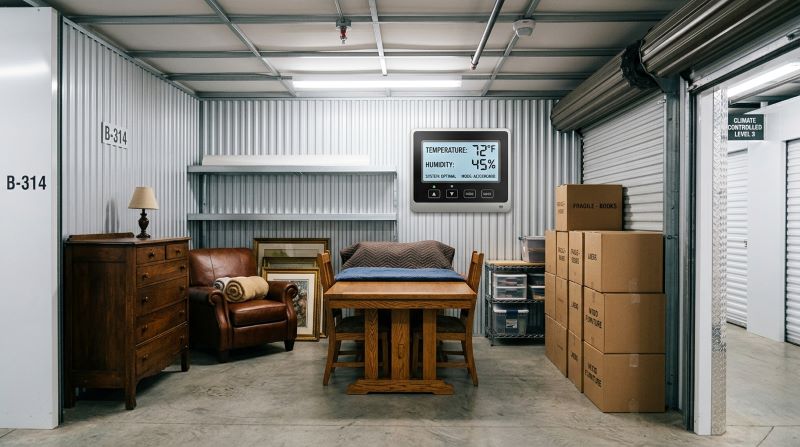
Climate-controlled storage is a unit where both temperature and humidity are actively regulated year-round to protect sensitive or valuable items from environmental damage.
Standard storage units are enclosed but unregulated. Their interior temperature tracks the outdoor climate: above 100°F in summer in many U.S. regions, near or below freezing in winter. Humidity fluctuates with weather patterns, seasonal changes, and the local climate. Items stored in these conditions for more than a few weeks are exposed to environmental stresses that accumulate invisibly over time.
Climate-controlled units maintain a consistent temperature between 55°F and 85°F and relative humidity between 35% and 55%. They are typically located inside multi-story or fully enclosed buildings, which adds an additional layer of insulation and security over drive-up outdoor units.
What Are the 6 Key Advantages of Climate-Controlled Storage?
Advantage 1: Protection Against Extreme Temperatures
Extreme heat and cold damage belongings in ways that aren't always visible until items are unpacked. A climate-controlled unit eliminates these temperature extremes entirely, keeping items at a consistent 55°F to 85°F regardless of what's happening outdoors.
Common temperature-related damage in unregulated units includes:
- High heat warping vinyl records, degrading adhesives, and cracking painted or lacquered finishes
- Freezing temperatures cracking ceramics, corroding batteries, and causing condensation inside electronics on retrieval
- Repeated freeze-thaw cycles splitting wood along the grain and weakening glue joints in furniture
- Heat above 90°F accelerating deterioration in rubber seals, gaskets, and flexible plastic components
These failure modes are entirely preventable with climate control and entirely unpredictable without it.

Advantage 2: Prevention of Moisture Damage
Humidity is the most underestimated threat in storage. Moisture causes wood to swell and warp, metal to rust and corrode, fabric to develop mold and mildew, paper to yellow and become brittle, and leather to crack. These effects compound silently over weeks and months and are often irreversible by the time they're discovered.
Climate-controlled units regulate humidity within the 35% to 55% range, where most materials remain stable. This single factor is the primary reason climate-controlled storage is one of the most important benefits of climate-controlled storage for movers storing household contents during a transition period.
Advantage 3: Protection for Sensitive Documents and Collectibles
Paper-based items and collectibles are disproportionately vulnerable to environmental storage conditions. Important documents such as tax records, birth certificates, legal papers, and photographs are susceptible to yellowing, brittleness, and mold at elevated humidity. Vintage items, coins, stamps, and collectibles develop oxidation and surface damage under fluctuating temperatures and moisture.
Items in this category that specifically benefit from climate-controlled storage include:
- Legal and financial documents, tax records, and contracts
- Family photographs, film negatives, and archival prints
- Books, manuscripts, and journals
- Coins, stamps, trading cards, and graded collectibles
- Wine, spirits, and vintage media such as vinyl records
For items that cannot be replaced or reprinted, the additional cost of climate-controlled storage is trivially small compared to the risk of permanent loss.
Advantage 4: Ideal for Storing Furniture and Appliances
Wood furniture is particularly sensitive to humidity fluctuations. High humidity causes wood to absorb moisture, swell, and warp. Low humidity causes it to dry out, crack, and split along the grain. Upholstered furniture absorbs ambient moisture and develops mold, mildew, and persistent odors in unregulated storage conditions.
Appliances face a different set of risks. Internal electronic components corrode under sustained humidity, rubber gaskets deteriorate at temperature extremes, and condensation inside sealed appliances creates mold that is difficult to remediate. Storing furniture and appliances in a climate-controlled unit is the most reliable way to retrieve them in functioning, undamaged condition, whether the storage period is three months or three years.
Advantage 5: Protection Against Pests and Vermin
Climate-controlled units offer better protection against pests than standard drive-up units. This isn't incidental. It follows directly from how these facilities are built and managed:
- Interior location inside a fully enclosed building with controlled entry points, rather than rows of individual outdoor doors
- Regulated humidity and temperature create less hospitable conditions for insects and rodents, which thrive in warm, damp environments
- Sealed building envelopes with fewer gaps, cracks, and unmonitored access points compared to standalone outdoor units
Climate-controlled units are not pest-proof, but the combination of these structural factors meaningfully reduces exposure over the duration of storage.
Advantage 6: More Reliable for Long-Term Storage
The climate-controlled storage benefits compound with time. For short-term storage of a few weeks, a standard unit is adequate for most items. For storage lasting three months or longer, the cumulative effects of temperature swings, humidity cycles, and seasonal transitions create real risk for most household contents.
The average storage rental duration is approximately 14 months according to Neighbor's self-storage industry data, meaning most storage customers are storing well into the range where climate control becomes the more protective choice. For movers bridging the gap between homes, seasonal storage users, and anyone storing items they genuinely intend to retrieve in good condition, climate-controlled storage is the right long-term default.
Is Climate-Controlled Storage the Right Choice for Your Situation?
The 6 advantages above consistently point to the same conclusion: climate-controlled storage is not a luxury upgrade. It is the appropriate choice for any item with genuine monetary or sentimental value stored for more than a few weeks.
The cost difference between a standard and climate-controlled 10x10 unit averages around $15 per month nationally. Against the cost of replacing water-damaged electronics, refinishing warped furniture, or losing irreplaceable documents, that premium is rarely difficult to justify.
If you're evaluating storage as part of a long-distance move, choosing a provider that offers climate-controlled units alongside moving services keeps your belongings with the same trusted team from pickup to storage to delivery.
BoxStar Movers offers climate-controlled storage units designed for exactly this scenario, paired with full-service long-distance moving, so nothing gets handed off to an unfamiliar facility mid-move.
Frequently Asked Questions
Do I need a climate-controlled storage unit?
You need climate control if you're storing anything sensitive to temperature or humidity, planning to store for more than a few weeks, or living in a region with extreme summer heat or winter cold. If your items are weather-resistant and the storage period is short, a standard unit may be adequate.
What items need climate-controlled storage?
Electronics, wood furniture, artwork, photographs, important documents, musical instruments, wine, leather goods, clothing stored long-term, antiques, and collectibles all benefit from climate control. These items are vulnerable to humidity-related mold, temperature-related warping or cracking, and condensation damage in unregulated conditions.
How does climate-controlled storage protect my items?
By maintaining a consistent temperature between 55°F and 85°F and relative humidity between 35% and 55%, climate-controlled units prevent the conditions that cause most long-term storage damage: moisture absorption, mold growth, warping, cracking, rust, and adhesive degradation.
What temperature is climate-controlled storage?
Most climate-controlled units maintain temperatures between 55°F and 85°F year-round. This range protects the widest variety of items from both heat damage (above 85°F) and cold damage (below 55°F) without requiring the more precise control needed for specialized items like wine or archival documents.
How do I pack furniture for climate-controlled storage?
Disassemble where possible and store hardware in labeled bags taped to each piece. Wrap wood surfaces in furniture blankets rather than plastic, which traps moisture even in climate-controlled conditions. Elevate pieces off the floor on pallets, leave space between items for air circulation, and place silica gel packets inside drawers or cabinets for added moisture control.

.webp)