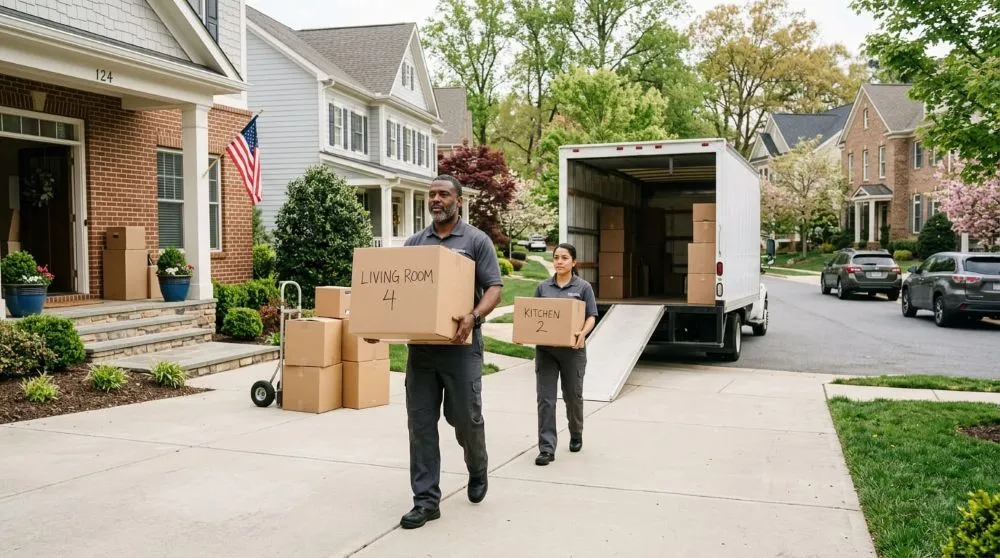
How Much Does a Local Move Cost? Real Moving Costs in Northern Virginia
September 8, 2026
September 8, 2026
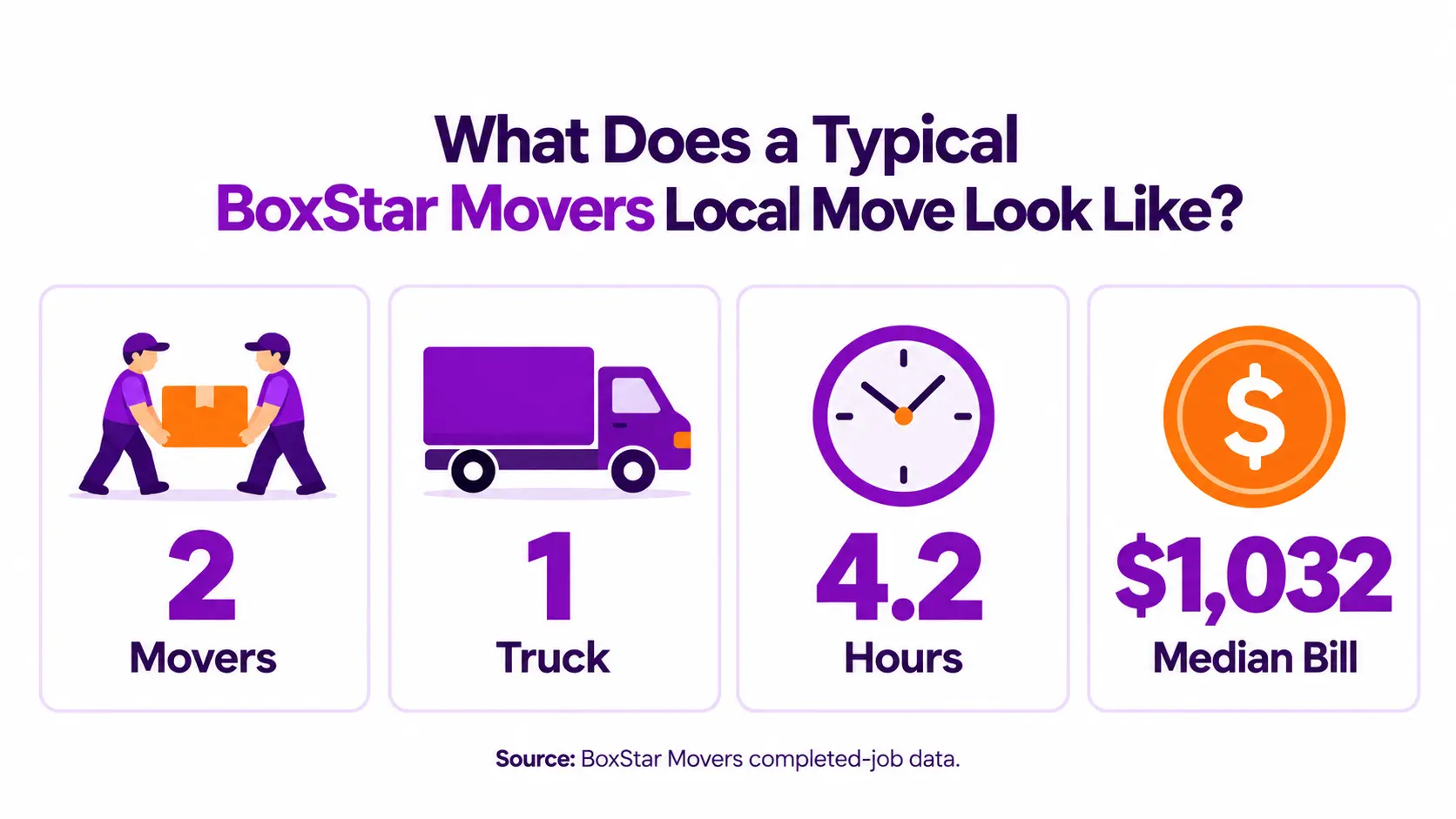
A typical local move cost in Northern Virginia lands around $1,032 for a median job with two movers, one truck, and about 4.2 hours of work. That number comes straight from BoxStar Movers' own completed jobs.
And that distinction actually matters. Google the cost of local move service, and you'll get a dozen different numbers that don't agree with each other. Some quotes only mention an hourly rate, which tells you almost nothing about what your day will actually look like. Others blend together moves from cities with wildly different labor costs and housing types, then hand you one "average" that doesn't apply to anyone in particular.
The real answer depends on your crew size, how long the job takes, and what extra services you need. That's exactly what we're breaking down here, using real, completed jobs instead of guesswork.
What Does a Typical Local Move Cost in Northern Virginia?
A typical local move here involves two movers, one truck, and roughly four hours on the clock, coming out to a median of $1,032. Rather than throwing an hourly rate at you and calling it a day, let's look at the whole picture of what an actual job looks like.
The Median Local Move: Crew, Truck, Time, and Cost
Here's the median profile across every completed local move in our data:
A median is a far more useful number than an average, because a handful of unusually big (or tiny) moves can drag an average way off course. The mean amount billed across these same jobs actually comes out noticeably higher than the median, which tells you a smaller batch of larger, longer jobs is pulling that average upward.
The median skips that problem entirely by showing you the true middle, which makes it a much more honest starting point for your own budget.
What's Actually Included in the Cost of a Local Move?
The cost of local move service really comes down to two things: the labor your crew puts in, and the truck that gets everything from point A to point B. Once you understand how each piece works, it's a lot easier to see why your move might land above or below that median.
Labor Time and Crew Size
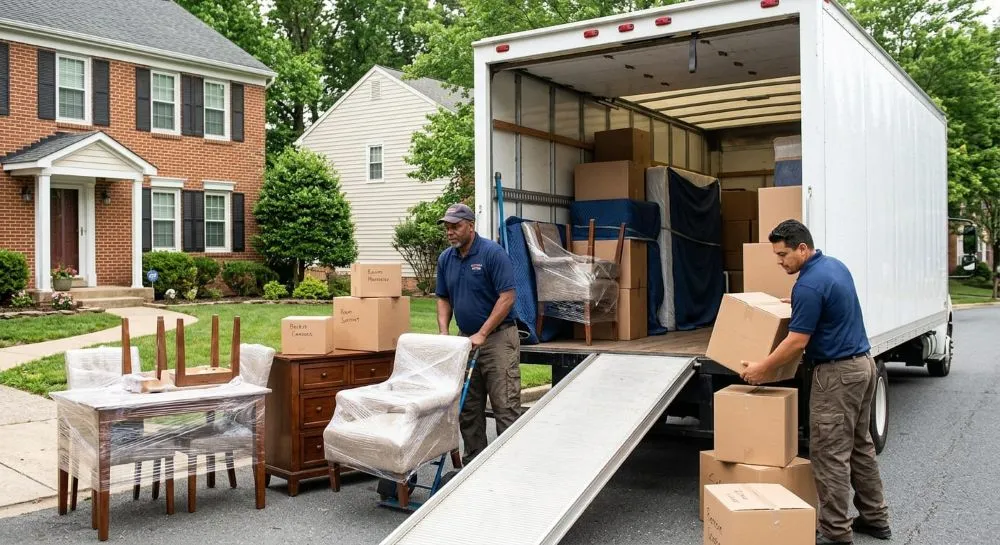
Labor is almost always the biggest line item in any local move. A bigger crew means faster loading and unloading, and enough hands on deck means your heavier furniture gets handled safely instead of slowing everyone down.
The median two-mover crew is a solid starting point for a typical household, but it's not a one-size-fits-all rule. A bigger home, a heavy furniture collection, or a tight timeline might call for a third or fourth mover, which changes both your hourly rate and the total hours the job takes.
Truck and Transportation
The truck determines how much fits in a single trip and how smoothly everything travels between your old place and your new one. Too small a truck means multiple trips back and forth, and every extra trip adds hours (and dollars) to your bill.
The typical BoxStar local move uses just one truck, which matches what a median household's inventory looks like. Bigger homes or moves with a lot of furniture might need a larger truck, or occasionally more than one, so it's worth flagging that with your mover ahead of time.
Why Do Local Moving Costs Vary So Much From One Household to the Next?
Local moving costs swing from household to household mainly because of three things: how much stuff you have, how easy your homes are to access, and whether anything needs special handling. Two houses with the exact same square footage can still need very different amounts of labor once you factor those in.
Home Size and Amount of Belongings
The total time a crew needs depends far more on your actual inventory than on your home's square footage alone. That includes the number of rooms being packed, how much furniture you own, how many boxes are already packed and ready to go, and whether you've got anything unusually large or heavy.
This is exactly why two similarly sized homes can require wildly different amounts of labor. A minimalist apartment will typically move faster than a same-size home packed with years of accumulated stuff, even though both technically fall under "local move."
If you're not sure where you land on that spectrum, our complete guide to packing, timing, and storage in Clarendon walks through how to size up your own move before booking.
Access Challenges That Increase Moving Time
Property conditions can add real time to a job no matter how much you're actually moving. The usual suspects:
- Stairs, especially multiple flights with no elevator in sight
- Long carrying distances between the truck and your front door
- Elevators with wait times or reserved usage windows
- Limited parking that pushes the truck farther away than you'd like
- Narrow doorways or hallways that slow down furniture handling
Sorting out these details before moving day, instead of discovering them once the crew shows up, is one of the easiest ways to avoid delays and keep your bill where you expect it.
If you're moving into or out of a building with tighter access, like a condo, our guide to a stress-free condo move in Shirlington covers exactly this kind of planning.
Specialty Items and Additional Handling
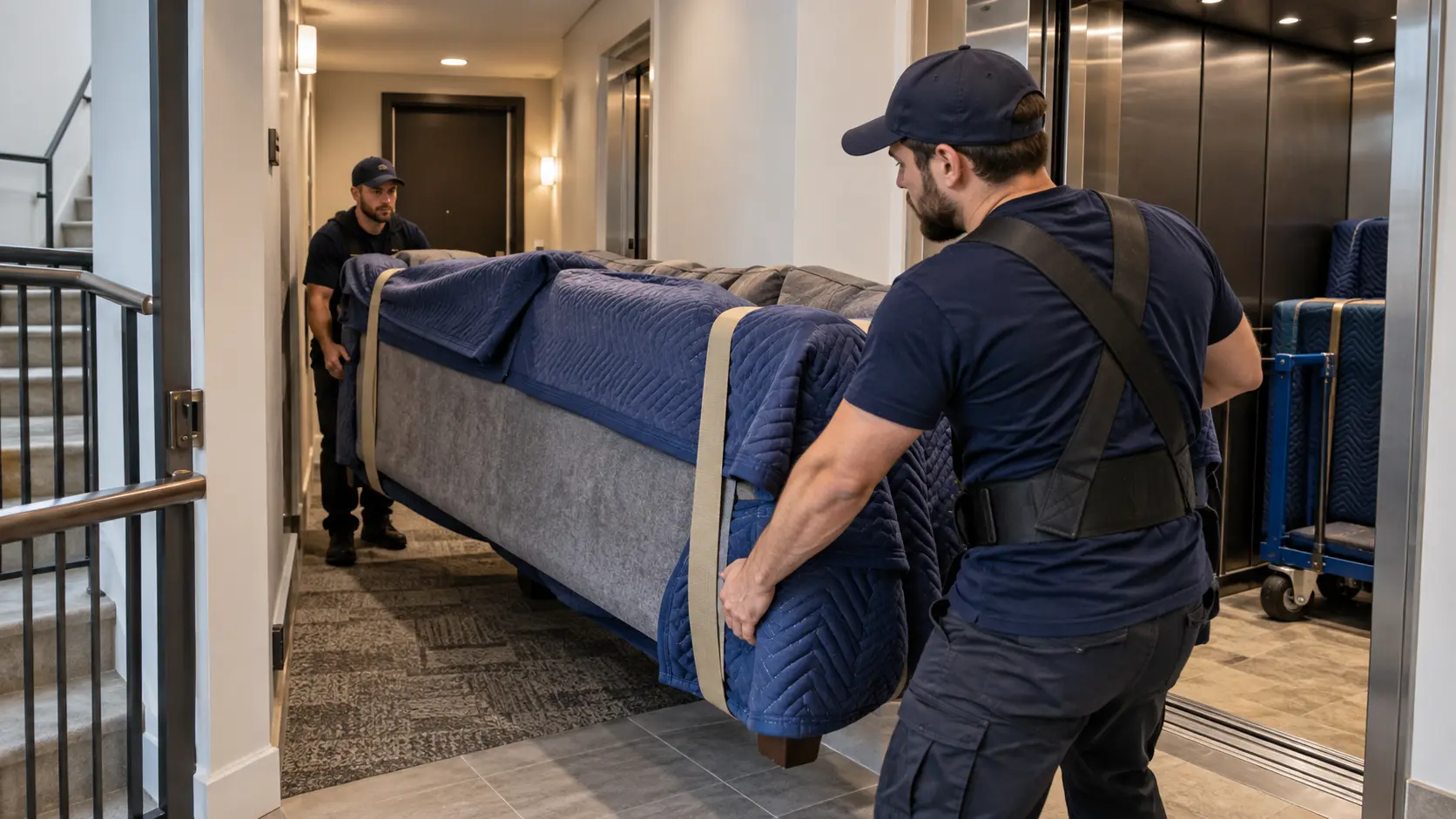
Some items need extra prep, equipment, or plain old careful handling that goes beyond a standard local move. Think pianos, gun safes, oversized furniture, and fragile valuables that need extra padding, disassembly, or a specific technique to move safely.
These specialty needs can meaningfully change the scope of an otherwise simple move, since they usually call for more crew members, specific equipment, or extra time, no matter how small the rest of the job is. BoxStar's piano moving and gun safe moving services exist for exactly this reason: a single heavy or delicate item can drive most of the planning for an entire move.
Do Local Moves Cost More on Weekends in Northern Virginia?
Not really, even though weekends are clearly when most people prefer to move. BoxStar's own scheduling data shows a strong pattern in when customers choose to move, but it doesn't back up the idea that weekend moves come with a bigger price tag.
When Customers Usually Choose to Move
Saturday is by far the busiest day on our calendar, with 414 completed jobs, compared to just 253 on Wednesday, our slowest day. That reflects when BoxStar customers have chosen to schedule their moves, largely around work schedules, not a claim about when the entire Northern Virginia moving market is busiest.
Weekend vs. Midweek Moving Considerations
Weekends are popular for an obvious reason: they fit around a typical five-day work week, so you don't have to burn a vacation day. Midweek moves, on the other hand, often come with more scheduling flexibility, since fewer people are trying to book the same day.
Here's the twist: BoxStar's own numbers show weekend jobs averaging $1,327 against $1,528 for midweek jobs, meaning midweek moves have actually billed higher on average, not lower. That's likely tied to the kinds of jobs that tend to land midweek rather than any difference in hourly rates, and it's a good reminder that "weekends cost more" isn't something our completed-job data actually supports.
If your schedule has any flexibility at all, our post on the best times of year to move in DC and how to dodge the worst traffic is worth a look before you pick a date.
What Should You Budget Beyond the Moving Bill?
A realistic budget for the cost of a local move service should cover more than just the crew's hourly bill. Two things worth planning for ahead of time: your own prep costs, and the very common practice of tipping your crew.
Moving Supplies and Preparation Costs
Boxes, tape, packing paper, and any specialty supplies for fragile or oversized items sit outside the labor bill, along with short-term storage if you need a gap between move-out and move-in. These costs are usually small compared to labor, but they add up fast if you leave them until the last minute and forget to factor them into your total cost for local move planning.
Packing boxes ahead of time, partially disassembling furniture where you can, and clearing pathways before the crew arrives can meaningfully cut down the labor time you're paying for. Since labor is the biggest driver of your local move cost, a couple of hours of prep the night before can translate directly into a smaller final bill.
Our Georgetown moving prep guide has a solid checklist if you want a head start.
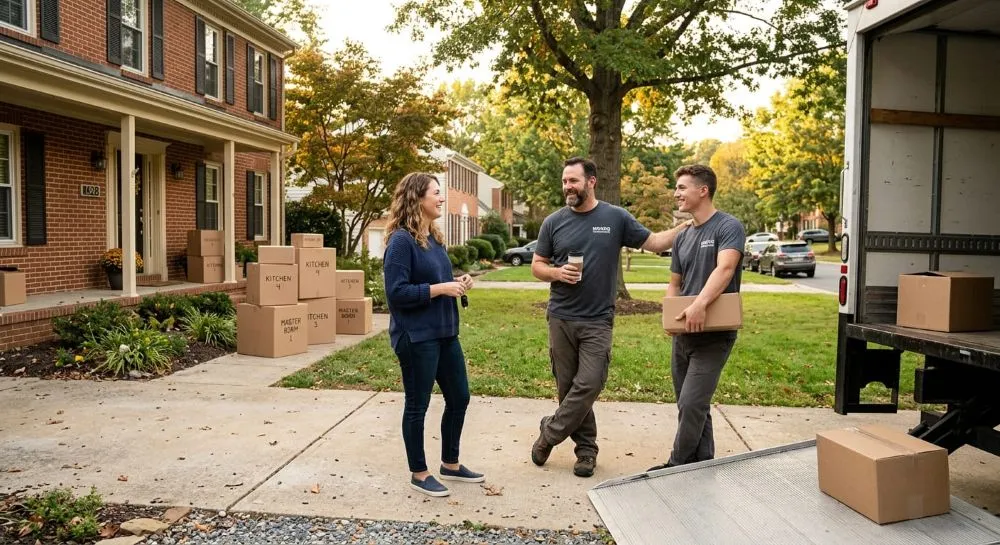
Tipping Movers: Typical Amounts and Patterns
Tipping is common but far from universal among BoxStar's completed jobs, and the data gives a rare, honest look at what customers actually do. Out of 2,247 completed moves, 703 included a tip, which works out to 31.3% of customers tipping their crew.
Among those who tipped, the median tip came out to $129, a specific, verifiable number that almost no company in this industry publishes. This reflects BoxStar's own completed jobs specifically, so treat it as a helpful planning reference for what similar customers have done, not a required amount or an industry rule.
Getting a Realistic Local Move Cost Estimate
Anyone still wondering how much a local move costs for their own situation should start with what an average move actually looks like, not a single number pulled from a generic online calculator. The median profile of two movers, one truck, and about four hours gives you a real starting point, but your final number will still come down to your own belongings, how easy your homes are to access, and any specialty services you need.
Data like this is meant to be a planning tool, not a promise. For the fine print on how the cost of local move estimates actually work, the Federal Motor Carrier Safety Administration's consumer guidance is a solid, unbiased resource, especially on the difference between a written estimate and what you actually pay on moving day.
Get Your Own Local Moving Quote
Want a number specific to your own home instead of a market-wide average? Request a free local moving quote and see exactly how your crew size, hours, and services shape your final cost.


.webp)