
How Long Does It Take to Move? Realistic Timelines by Home Size
October 31, 2026
October 31, 2026
A typical local move takes several hours, but the exact time depends largely on home size, the amount of furniture and boxes, the number of movers, and access conditions. It is a question many households ask, since the Census Bureau's American Community Survey found that 11.8% of Americans moved to a different residence in 2024.
Across the 2,247 moves BoxStar Movers completed between September 2025 and September 2026, the median job lasted 4.2 hours with two movers and one truck. That is a useful reference point for local moving jobs, not a universal estimate for every home size.
This guide pairs that data with planning ranges by home size, so you can see where your own move is likely to land.
How Long Does It Take to Move Based on Home Size?
For professional local moves, planning ranges run from about 2 to 4 hours for a studio to a full day or more for a large house. The table below shows illustrative ranges by home size.
- Note: These are illustrative planning estimates, not timelines from BoxStar's records. They generally cover loading, transportation, and unloading for local moves with belongings already packed.
Full-service packing, difficult access, and longer travel distances can change the duration substantially.
The ranges are wide on purpose. Two homes of the same size can land at opposite ends of a range, depending on how prepared they are: one with sealed boxes and an elevator reserved, the other with open boxes and a long carry to the truck.
Packing, unpacking, and setting up the new home add hours that the table does not show. Anyone planning the whole job should ask how long the moving process takes from the first box to the last, and not only how long the truck is loaded.
So how long does moving take for your home? The sections below walk through each size, and the average time it takes to move house depends on which factors apply to you.
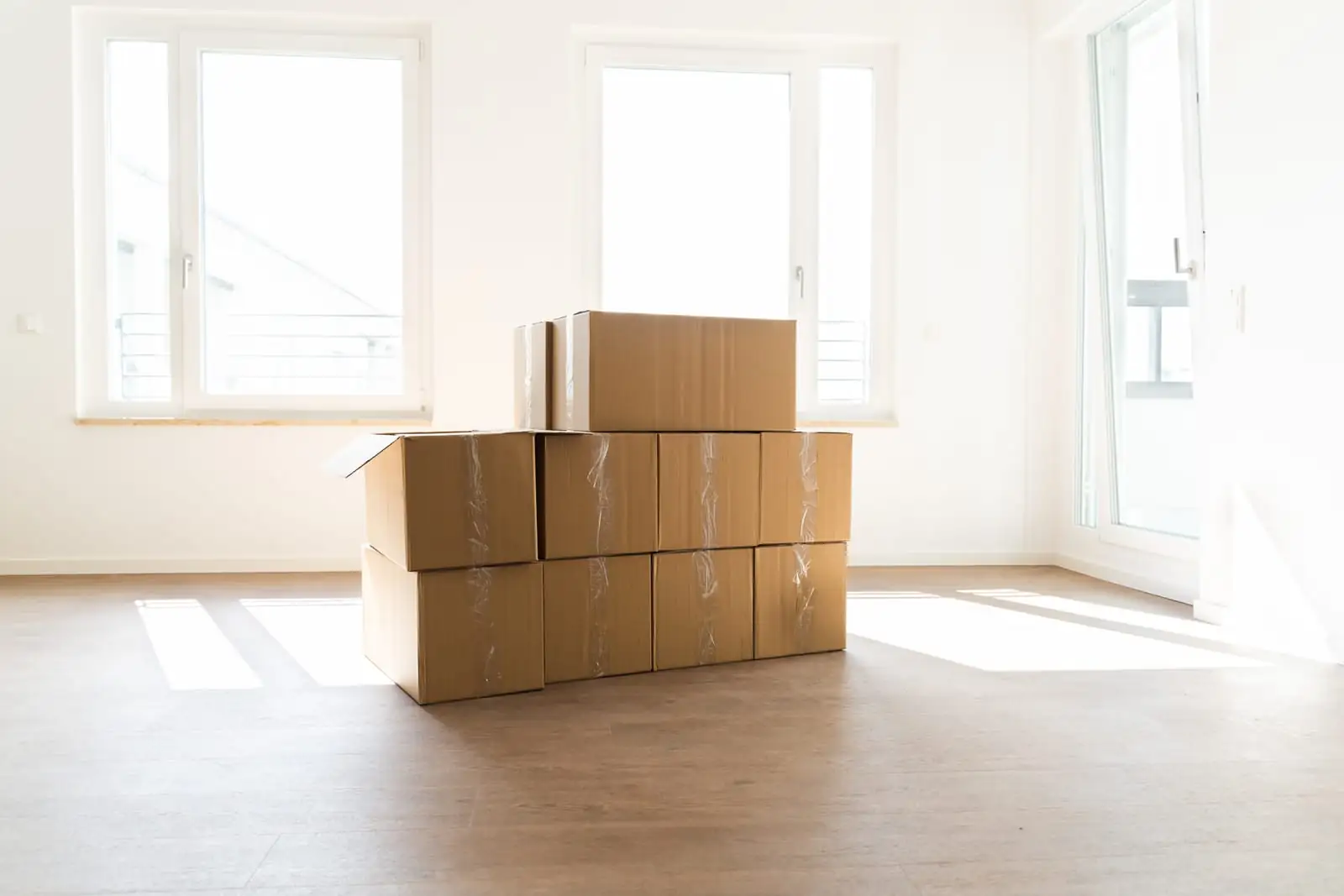
How Long Does It Take to Move a Studio Apartment?
Studio moves can often be completed within a few hours. There is limited furniture, fewer boxes, and relatively straightforward loading, so the crew can work steadily from start to finish. For a studio, the biggest swing factor is usually access, not the belongings themselves.
Access can still cause delays, particularly in DC and Arlington apartment buildings. Common slowdowns include:
- Elevator reservations that limit the time window
- Loading zones or street parking that sit far from the entrance
- Building move-in hours that cut the day short
For renters dealing with elevator reservations, parking restrictions, or tight moving windows, our guide to moving from apartment to apartment explains how to coordinate these details before moving day.
How Long Does It Take to Move a 1-Bedroom Apartment?
A one-bedroom move takes longer than a studio because of the extra bedroom furniture, appliances, and belongings. The crew often stays at two movers, but the loading list is simply longer.
Two things shape the result most: packing readiness and building access. Boxes that are sealed and labeled before the crew arrives keep the job moving, while a long wait for an elevator can erase that advantage.
A household that is still packing when the movers arrive can add an hour or more of paid waiting and rushing, depending on how much is left to pack.
How Long Does It Take to Move a 2-Bedroom Apartment or House?
Two-bedroom moves may need more loading time, more furniture disassembly, and sometimes a larger crew. Apartment-to-apartment moves can also differ from house moves, since stairs, elevators, and driveways change how far everything has to be carried.
The amount of furniture matters more than the number of bedrooms alone. A sparsely furnished two-bedroom can load faster than a crowded one-bedroom, which is why inventory is a better guide than room count. Several factors move the clock:
- How much furniture there is, and how large the pieces are
- Which pieces need disassembly
- Stairs versus elevators
- The carry distance from the door to the truck
How Long Does It Take to Move a 3-Bedroom House?
A three-bedroom house usually adds larger furniture inventories, more bedrooms, storage areas, and outdoor belongings such as patio sets or tools. Each of these adds loading time before the truck can leave.
A larger crew may help reduce the overall duration when there is enough work to share. Truck capacity matters too, because efficient loading keeps the job to one trip instead of two. Three or four movers can load a house faster than two, but only when the pieces can be carried in parallel and the pathways are clear.
How Long Does It Take to Move a 4-Bedroom or Larger House?
Larger households may need a full moving day or several stages. Four things stretch the schedule most:
- Multiple trucks that must be loaded and driven
- Large furniture that needs more hands or disassembly
- Specialty items that need careful handling
- Extensive loading requirements across many rooms
Some households split loading and unloading across two days, especially when the new home is not ready the same day.
Professional packing or separate moving days may be worth considering in these cases.
This moving and storage service guide explains how storage can bridge the gap between stages.
How Long Did a Typical BoxStar Job Actually Take?
For anyone asking how long it takes to move locally, BoxStar's records offer a practical reference without making claims about specific property sizes. Across 2,247 completed moves between September 1, 2025, and September 1, 2026, the median job looked like this:
A median is the middle observation: half of the jobs were shorter and half were longer. It is not the duration of every move, and it is not necessarily the average.
The average time it takes to move house varies enough by home that a single number can mislead. If an estimate you receive is far above or below 4.2 hours, ask what is driving the difference, such as stairs, a larger inventory, or a longer drive.
The figure is useful as a reference for local moving services:
- It shows what a typical local job looked like in BoxStar's records
- It gives a sanity check when comparing an estimate
- It does not show how long moves take for each home size, because the records do not break that out
Note: The median does not cover all the time needed to pack and settle into a home.

How Much Time Should You Actually Set Aside for Moving Day?
Treat any estimate as a planning reference and add a buffer, since smaller local moves may fit into part of a day while larger households may need a full day or longer. A moving estimate is a guide to the work involved, not a guaranteed completion time.
A good answer to how long it takes to move is a range plus a buffer, which protects the rest of your day, such as key handoffs, utility appointments, and building elevator reservations.
Using the table as a guide, a studio or one-bedroom may take a half day or less, a two- or three-bedroom home usually needs most of a day, and a four-bedroom or larger home may need a full day or more. Those are planning ranges, and how long moving takes in practice depends on your access and preparation.
Allow extra time for the things that vary most:
- Traffic between the two addresses
- Building access, elevators, and parking
- Unexpected complications, such as furniture that will not fit through a door
Anyone asking how long the moving process takes should count the full chain, from the last box packed to the first night in the new home. The physical move is only the middle part of that chain.
- Tip: Ask each company how it counts time, including when the clock starts and whether travel between homes is included, before you compare any estimates.
Plan Your Moving Timeline Around Your Actual Home
Bedroom count is a useful starting point, but it cannot fully predict how long moving will take. Two similarly sized homes may need very different timelines because of their inventories, access conditions, travel distances, and preparation.
Remember that unloading is not the end of settling in. Our guide to how long it takes to unpack after moving helps you plan the additional time needed to organize rooms and make your new home functional.
When requesting an estimate, describe the move accurately: the inventory, the stairs or elevators, the parking, and the distance. A realistic timeline should account for the work involved, not simply the number of rooms.
Include the details that drive time: the inventory, stairs or elevators, parking, travel distance, packing needs, and any specialty items. The more complete the description, the closer the estimate will be to the real day.
So, how long does it take to move? The honest answer is a range, and the average time it takes to move house is only a starting point. How long does the moving process take for you comes down to your inventory, your access, and how ready you are when the crew arrives.
Ready for a Timeline That Fits Your Home?
Share your inventory and access details, and a quote can turn these ranges into a plan for your move.
Get a free, no-obligation moving quote from BoxStar Movers and describe your move for a realistic time estimate.