
Why Your Moving Estimate May Differ From the Final Bill
A moving company sends an estimate, the move goes smoothly, and then the final invoice arrives higher than expected. Sometimes it arrives lower. In both cases, the gap between a moving estimate and the final bill usually traces back to a short list of causes.
Those causes are actual labor time, changes in the moving inventory, property access, and services that were not part of the original quote. For interstate moves, the Federal Motor Carrier Safety Administration (FMCSA) describes a non-binding estimate as not a bid or contract and tells consumers to expect the final cost to exceed it.
This guide covers six reasons a final bill can rise, and how to build a realistic moving cost estimate before moving day.
6 Reasons Your Final Moving Bill May Be Higher Than Estimated
Most final bills rise because the job turned out larger, slower, or harder than the quote assumed. The same factors can lower a bill when a job turns out smaller or faster.
1. The Move Takes Longer Than Expected
With hourly pricing, the final bill follows the clock. Extra loading and unloading time, and delays nobody planned for, add billable hours.
Delays have ordinary causes: a crew waiting on an elevator, boxes that are not packed yet, or furniture that turns out to need disassembly. Each one can push the job past the time the moving estimate assumed.
Across the 2,247 moves BoxStar Movers completed between September 1, 2025, and September 1, 2026, the typical job looked like this:
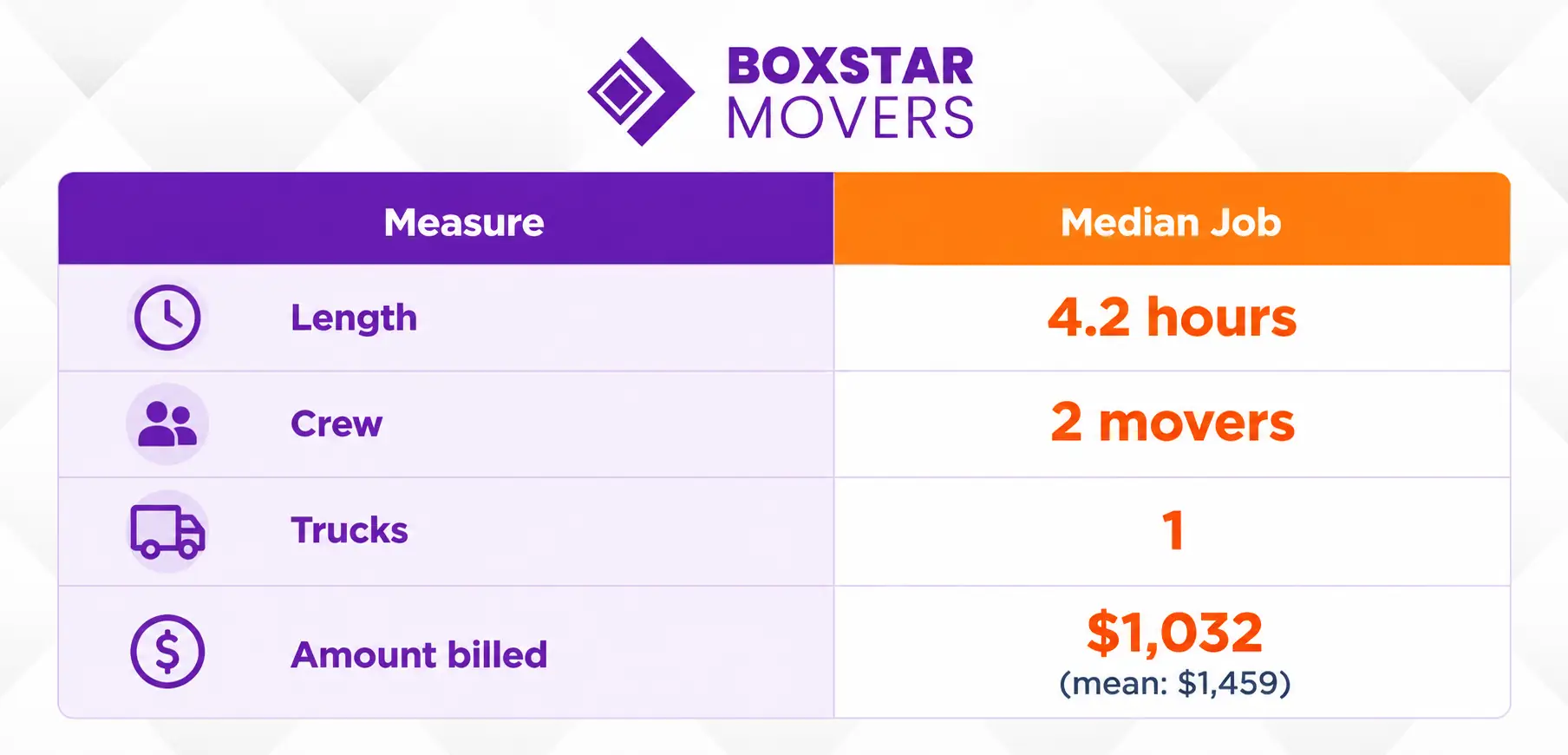
On a job billed hourly, one extra hour adds roughly a quarter to a 4.2-hour move.
- Note: These are medians from BoxStar's completed jobs. They describe typical jobs and do not measure how often a final bill differs from an estimate.
2. You Have More Belongings Than Originally Estimated
An incomplete inventory is one of the most common sources of a higher bill. Garages, attics, sheds, and closets are easy to overlook, and extra furniture or boxes added before moving day change the job.
More belongings mean more labor, more truck space, and more time, which feed directly into the bill. A larger load can also push a job past what one truck carries, which may add a trip or a vehicle. For interstate moves within 50 miles of the mover's place of business, FMCSA requires the estimate to be based on a physical survey of the goods unless the customer waives it in writing, which shows how much an accurate inventory matters to the estimated cost of moving.
For interstate moves, FMCSA says that when a mover sees additional goods or services before loading that the estimate did not identify, it must reaffirm the estimate or negotiate a revised written one if it agrees to do the job. If the two sides cannot agree, the mover may refuse the shipment. Raising changes early avoids that standoff on loading day.
3. Access to Your Property Is More Difficult Than Expected
Access conditions slow a crew down, and slower work costs more. Common factors include:
- Stairs, elevators, and long carrying distances
- Limited truck parking or loading access
- Building restrictions, such as set move-in hours or required reservations
Note: For interstate moves, FMCSA says a binding estimate must be updated when unforeseen circumstances such as stairs, elevators, or required parking permits come up.
Telling the mover about access problems before the quote keeps them inside the moving estimate and off the invoice as surprises.
This guide to moving with only street parking shows how much planning loading access can take.
4. You Request Additional Moving Services
Services added after the quote change the scope of work. The most common additions are:
- Packing and unpacking assistance
- Furniture disassembly and reassembly
- Specialty-item handling or additional equipment
Packing alone can add hours, since the crew must wrap and box items before anything is loaded. For interstate moves, FMCSA says charges for services requested after the contract is signed are collected at delivery. A few packing mistakes can also keep an unplanned packing request from appearing on moving day.
From everyday household belongings to oversized, heavy items, BoxStar Movers has experience handling all kinds of moves. Here's a quick look at our team successfully moving three statues weighing 1,200 pounds each.
5. Travel Time and Other Charges Weren't Clearly Understood
Some companies bill travel time or a trip fee, and some set a minimum number of labor hours. These terms vary, so the estimated cost of moving only means something once you know what it includes. Confirm four things before signing:
- How travel time is billed
- Whether a minimum labor charge applies
- Which other fees could appear on the invoice
- What the original quote includes and excludes
A clear moving estimate lists these terms in writing instead of leaving them to be discovered on the invoice. Asking about them early is one of the simplest parts of estimating moving costs accurately.
6. Your Moving Plans Change After Receiving the Estimate
Any change to the plan the estimate was built on can change the price, because a moving cost estimate only covers the plan it describes. Typical examples include:
- A new pickup or delivery address
- An added stop along the way
- A storage requirement that was not in the original plan
- Last-minute adjustments to what is being moved
For interstate moves, FMCSA says a mover may amend an estimate before loading by mutual agreement, but not after loading.
This moving and storage service guide explains how to build storage into a plan from the start.
How Can You Avoid Unexpected Charges on Moving Day?
Give the mover complete, accurate information up front, understand what the quote includes, and prepare the home so the crew can work without delays.
Provide Accurate Information When Requesting a Quote
A moving cost estimate is only as good as the information behind it, and the mover can only price what it is told about. Before requesting a quote:
- Prepare a complete inventory, room by room
- Disclose specialty items and unusual access conditions
- Mention any additional services you may need
Tip: Walk through every storage area, including the garage, attic, and shed, and photograph what you find. Photos help the mover see what the inventory leaves out.
Review the Estimate Before Confirming Your Move
Read the estimate line by line. Check the hourly rate, minimum charges, travel time, and included services. Ask which circumstances could change the quoted amount, and request clarification of any charge you do not recognize.
When comparing companies, give each one the same inventory and the same access details so the quotes line up.
- For long-distance moves, these long-distance moving tips explain what to look for in an estimate.
It also helps to know which type of estimate you are getting. FMCSA's rules for interstate moves treat the two main types differently.
These federal rules apply to interstate moves. Local moves follow state rules and the written agreement, so ask which rules apply to yours.

Prepare Your Home to Minimize Delays
Preparation shortens the job. Finish packing before the crew arrives unless packing is included, reserve elevators, arrange parking, and make furniture and boxes accessible for loading.
A crew that can start immediately spends fewer billable hours waiting. Setting aside anything that is not moving, and clearing walkways between each room and the door, keeps the crew from stopping to ask questions.
Inform Your Moving Company About Changes in Advance
Tell the mover when the plan changes, and update the inventory if it does. Confirm any change to locations or arrangements, and request an updated moving estimate if the scope of work changes significantly.
Early notice lets the company adjust the plan and the price together, before the job starts, and leaves time to reschedule if needed.
Why an Accurate Moving Estimate Matters More Than the Lowest Quote
A low initial estimate does not necessarily mean a lower final cost. A quote built on a partial inventory or unstated assumptions can look attractive until the job turns out larger, slower, or harder than it assumed.
The goal is a realistic moving estimate based on complete information, a clear understanding of the pricing terms, and no surprises when the move is finished. Estimating moving costs well means comparing what each quote includes, not only the bottom line.
The estimated cost of moving is most reliable when the inventory is complete, the access details are shared, and the pricing terms are understood before the crew arrives. That preparation lets the final invoice confirm the quote.
Before choosing between quotes, ask each company the same questions: what is included, what could change the price, and how changes are handled once the job starts. The answers show which estimate is actually realistic, and which one simply leaves the hard questions for moving day.
Ready to Get a Quote Based on Your Real Inventory?
The most reliable estimate starts with accurate details about your belongings, your access, and the services you need.
Request a free moving quote from BoxStar Movers with clear, upfront pricing built on your actual inventory.