
When Is the Cheapest Time for Moving to Northern Virginia?
September 4, 2026
September 4, 2026
The cheapest time for moving to Northern Virginia is late winter, specifically January and February, when demand across the region drops to its lowest point of the year.
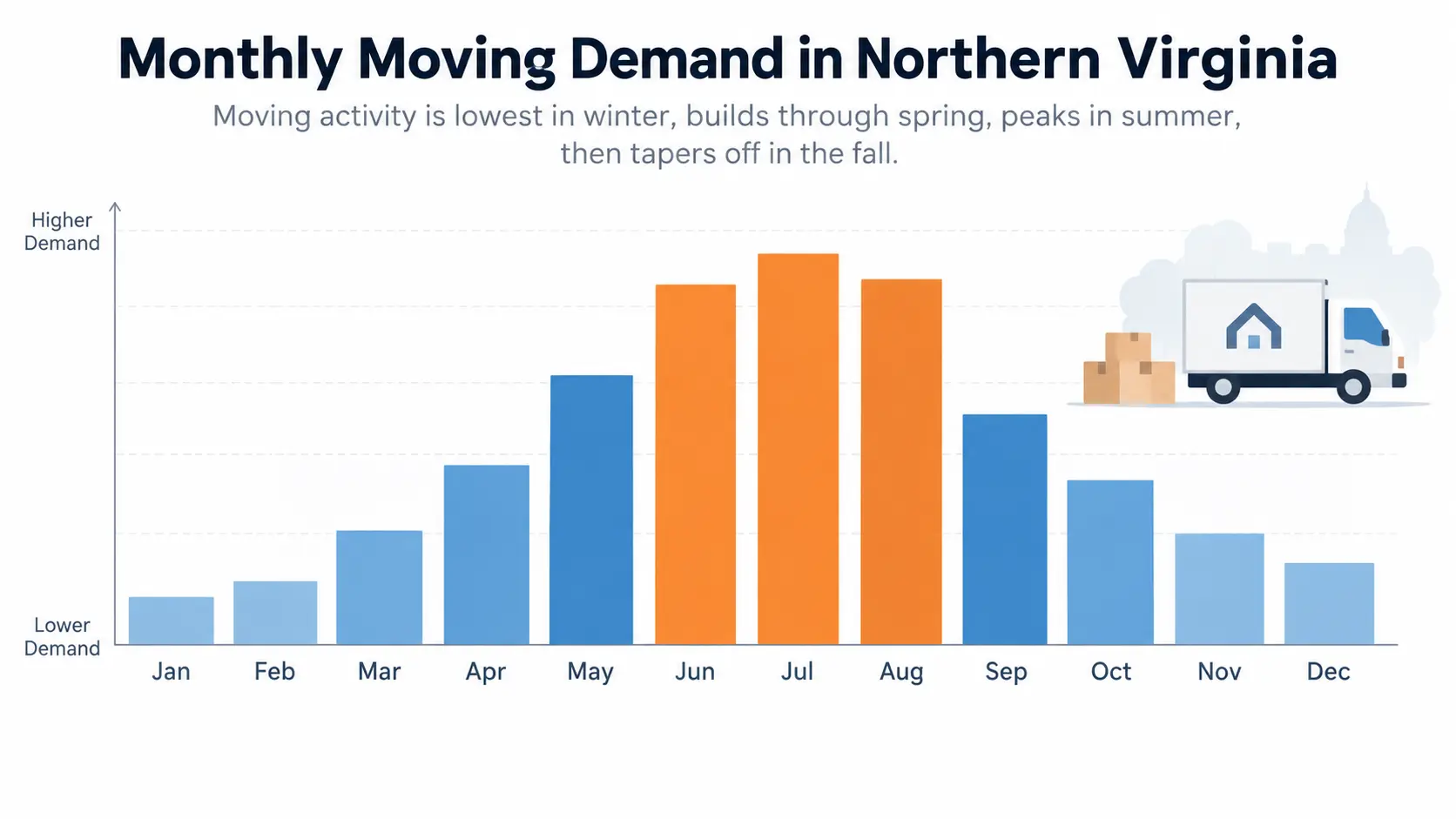
According to BoxStar Movers' own booking data, drawn from 2,247 completed moves between September 2025 and September 2026, June through August account for roughly a third of all yearly job volume, while January and February together make up just a tenth.
Here's what you'll walk away with: a clear picture of when demand peaks, why it peaks then, what that means for your wallet, and how to use a flexible schedule to your advantage when moving Northern Virginia households of any size.
The Northern Virginia Moving Calendar, By the Numbers
Summer in Northern Virginia isn't just a "busy season." It's a demand cliff. June, July, and August together account for 36% of BoxStar's 2024 job count and 34% of 2025 revenue, while January and February combine for only 10% of both measures. Put another way, summer carries roughly three and a half times as much moving activity per month as winter does.
That gap matters because moving companies operate with a fixed number of trucks and crews. When a third of the year's demand for moving Northern Virginia homes lands in a three-month window, availability tightens, waitlists grow, and pricing power shifts toward the mover.
When demand drops to a tenth of the year in a similar-sized window, the opposite happens: more open dates, more flexible scheduling, and less competition for the same crew.
Why Summer Is a Cliff, Not Just a "Busy Season"
Summer in Northern Virginia is a cliff because several independent forces peak in the same three months instead of spreading demand across the year. Understanding what drives that overlap makes it easier to see why the trough in winter is so predictable rather than random.
What Drives the Summer Surge in NoVA
Northern Virginia has a few local factors that push moving demand into a tight summer window:
- Military PCS season. Permanent change of station orders for military families are concentrated between mid-May and the end of August, and this window alone accounts for a large share of annual Department of Defense household goods shipments nationwide, according to Military Times, which reported that more than 120,000 shipments, about 40% of the annual total, move during this stretch.
- Federal contractor turnover. Many contract cycles and job transitions in the DC-metro workforce align with the government's fiscal year and the broader hiring calendar, which clusters around summer.
- School-year timing. Families with kids overwhelmingly prefer to relocate between school years rather than mid-semester.
- Lease-renewal clustering. A large share of apartment leases in the region turn over in summer, which means move-out and move-in dates bunch up around the same weeks.
None of these factors alone would create a cliff. Combined, they push a huge share of the region's moving decisions into the same 90-day window, which is a big part of why moving Northern Virginia in summer feels so much more competitive than moving in winter.
What the Surge Actually Costs You
The practical effect of the summer surge is fewer options, not necessarily a higher hourly rate. Moving Northern Virginia households during peak months means competing for the same limited pool of trucks and crews that everyone else wants.
Roughly three and a half times more moving activity happens per month in summer compared to winter, which translates into fewer available Saturdays, shorter windows to request your preferred date, and less flexibility if your plans shift by even a few days.
This shows up in real scheduling terms. A homeowner who calls in June looking for a specific Saturday might find that date already booked, while the same request in February would likely have several options. The dollar cost of a move doesn't always change dramatically with the season, but the cost in stress, planning flexibility, and last-minute availability absolutely does.
Why February Buys You the Pick of the Calendar
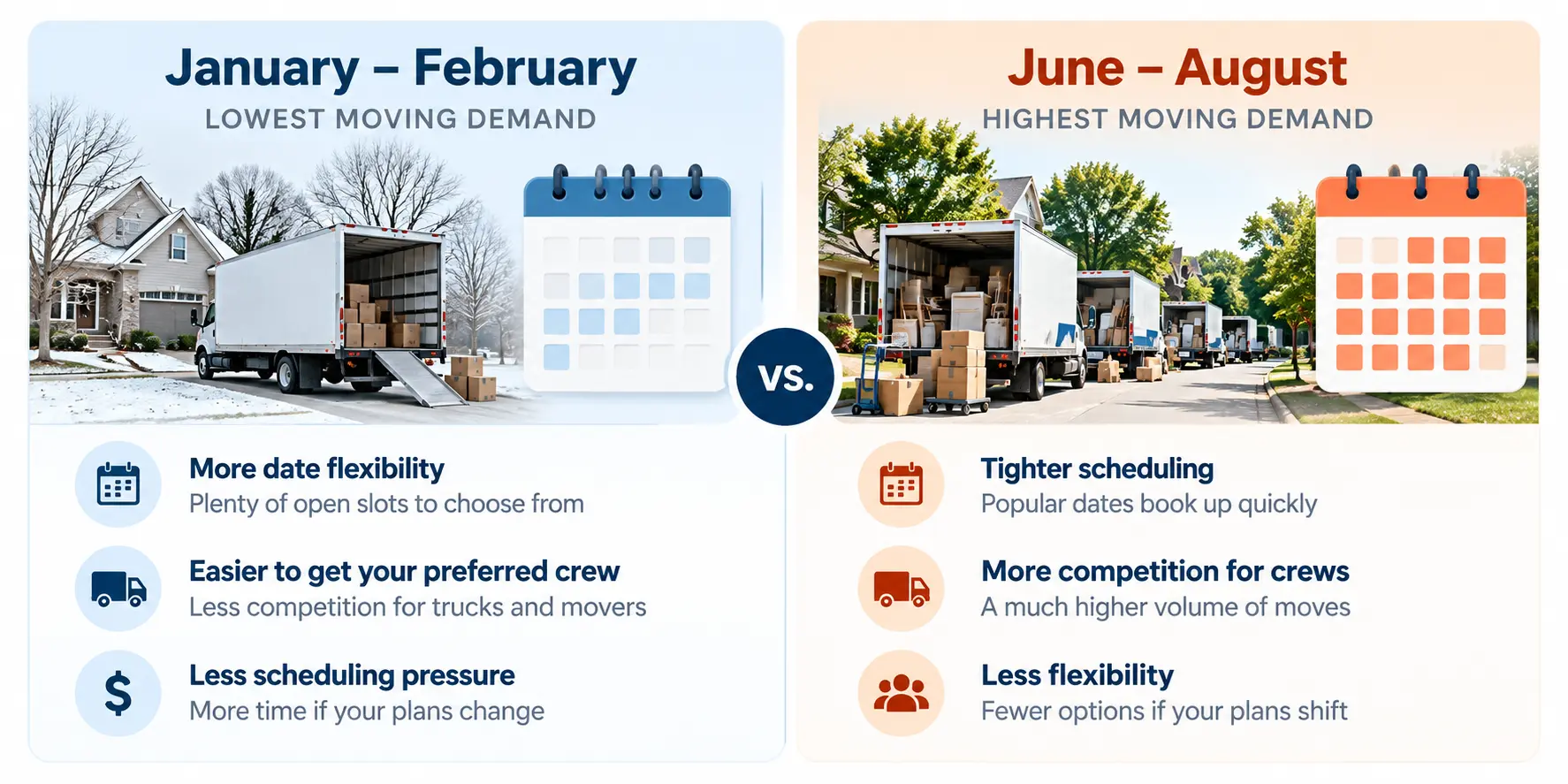
February is the best month for scheduling flexibility because it sits at the bottom of the region's demand curve, where January and February together make up only 10% of the year's moving volume. That means less pressure on booking slots and more room to request exactly the date, crew size, and truck type you want when moving Northern Virginia on your own timeline.
What a Low-Demand Month Actually Gets You
Moving during a low-demand month like February changes the entire booking experience:
- First choice of date and time. Instead of choosing from whatever's left, you're picking from a mostly open calendar.
- More flexibility on crew size and truck type. Movers aren't stretched thin trying to cover overlapping jobs, so it's easier to get the right-sized team for your specific move.
- Less pressure to book weeks in advance. While early booking is always smart, a quiet month gives you more breathing room if your plans change.
This is the practical payoff of the seasonality data: if your dates are flexible, February is the month that buys you the most control over your own move.
But What About Winter Weather?
Winter weather in Northern Virginia is a real consideration, but it's a manageable one rather than a dealbreaker. The region typically sees milder winters than areas farther north, with occasional cold snaps or a snow event rather than sustained harsh conditions.
The honest trade-off is this: you may need a backup date in mind in case of a storm, but you'll gain far more scheduling flexibility than you'd lose to the occasional weather delay.
What About the Rest of the Year? A Realistic Month-by-Month Read
Not everyone can move in February, and that's fine. Spring and fall function as shoulder seasons, sitting between summer's peak and winter's trough. These months won't offer the rock-bottom demand of January and February, but they consistently avoid the tightest scheduling squeeze of June through August.
A reasonable rule of thumb: if February isn't realistic for moving to Northern Virginia on your timeline, aim for early spring or late fall rather than the summer peak. You won't get the full advantage of the lowest-demand months, but you'll still avoid the worst of the booking crunch.
This reflects patterns from BoxStar's own completed jobs across two years, not a claim about the moving industry as a whole, and it lines up with what we've also seen in our best times to move in the greater DC area breakdown.

How to Use This If You Have Flexibility
If you have any flexibility in your move date, the seasonality data gives you a practical framework for picking the cheapest and easiest window on the calendar for moving in Northern Virginia in your favor.
A Simple Decision Framework
- Check your flexibility window. If you can move any time in the next 60 to 90 days, you have room to target a lower-demand month.
- Default to late winter if possible. January and February offer the widest scheduling flexibility of the year.
- If winter doesn't work, aim for shoulder season. Early spring or late fall beats booking during the June through August peak.
- Book ahead regardless of the month. Even in a quiet month, reserving your date early protects your preferred time slot and crew size.
- Compare your options directly. Request a free moving quote for a few different target dates to see how availability and scheduling change across the calendar.
This approach works whether you're planning a small apartment move or a full household relocation, and it applies just as well if you're weighing local moving services against a move that also requires short-term storage between homes.
Moving Northern Virginia on Your Terms
If there's one insight to take from all of this, it's that flexibility is worth more than most people realize when moving to Northern Virginia. February isn't just a quieter month on paper. It's the window where you get to choose your date instead of settling for whatever's left on a mover's calendar. That single scheduling advantage often matters more than chasing a slightly lower quote in a busier month.
Whether you're relocating a one-bedroom apartment or a full house, timing your Northern Virginia moving plans around the region's actual demand curve puts you in a stronger position from the very first phone call. Two years of consistent data points in the same direction: less competition for trucks and crews when moving in Northern Virginia in winter, and a real crunch in summer.
Ready to see what your ideal moving window looks like?
Request a free, no-obligation quote from BoxStar Movers today and lock in the date that works best for you.


.webp)