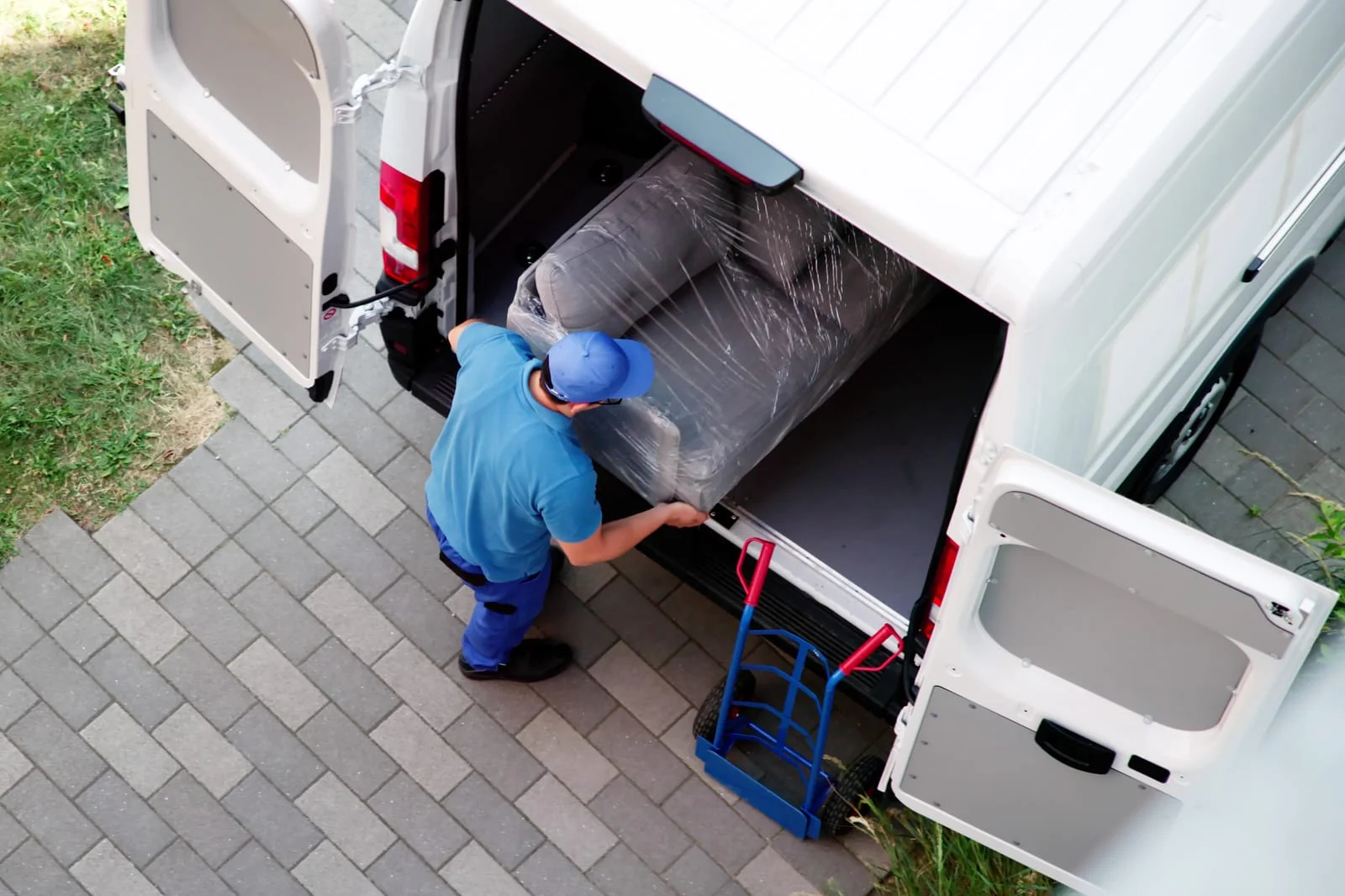
Office Furniture Moving Services: What to Check Before Booking
According to a 2024 industry data summary from the American Moving & Storage Association, cited by Moving Muscle in October 2025, standard released-value protection caps a mover's liability at just $0.60 per pound, regardless of what an item is actually worth. That number matters a lot more once you're talking about a $4,000 executive desk or a conference table covered in built-in wiring.
Office furniture isn't just heavy, it's often expensive, awkwardly shaped, and paired with electronics that can't survive rough handling, which makes the wrong mover a costly mistake. A dropped cubicle panel or a cracked conference table isn't a minor inconvenience; it's a repair bill, a delayed reopening, and possibly a client meeting held around a folding table. These moves carry real financial and operational risk, which makes vetting a provider far more important than with a typical residential move.
This category of moving covers the disassembly, padding, transport, reassembly, and placement of desks, chairs, cubicles, conference tables, and shelving, everything a business needs to get its physical space up and running in a new location. Before you book, it's worth knowing exactly what should be included, what to verify, and where the gaps usually show up.
What Are Office Furniture Moving Services?
This type of provider typically includes disassembly, protective wrapping, transport, reassembly, and final placement of the furniture pieces that make up a functioning office. It's often offered as part of a broader commercial moving service, though some providers offer it as a standalone job. Many providers also handle the electronics connected to that furniture, monitors, phones, and small equipment, as part of the same job, though that scope varies.
What's Typically Included in the Service
A standard job usually covers desks, task chairs, filing cabinets, cubicle systems, conference tables, and shelving units. The service should include everything from taking furniture apart safely to putting it back together correctly at the new location, not just loading it onto a truck. Ask specifically whether placement, meaning setting furniture in its final spot per your floor plan, is part of the quoted price.
How Furniture Moving Differs From General Office Moving
General office moving covers the entire relocation: boxes, files, IT infrastructure, and furniture together. Furniture-focused moving narrows in on the heavy, bulky pieces specifically, often with crews trained in disassembly techniques that a general packing team may not have. If your move is mostly furniture with minimal boxes or IT complexity, a furniture-focused provider can sometimes be a faster, more cost-effective fit.

What Should You Check Before Booking a Furniture Moving Provider?
Before signing anything, verify licensing and insurance, confirm the provider has real experience with office-specific furniture, and clarify whether electronics are included in the scope. Skipping this step is how businesses end up with cracked veneer, missing hardware, or a bill full of charges nobody mentioned upfront.
Licensing, Insurance, and Liability Coverage
- Ask for proof of insurance. A legitimate provider will show general liability and cargo coverage without hesitation.
- Clarify the valuation option. Confirm whether you're covered under basic released-value protection or a higher full-value option, since the difference in payout can be significant.
- Get the coverage terms in writing. Verbal promises about "we'll take care of it" don't hold up if something actually breaks.
- Check reviews for damage-related complaints. Patterns of unresolved claims are a bigger red flag than a single bad review.
Experience With Office-Specific Furniture (Cubicles, Conference Tables, Modular Systems)
Cubicle systems and modular furniture vary significantly by manufacturer, and a crew unfamiliar with your specific brand can turn a straightforward reassembly into a multi-day delay. Ask directly whether the company has handled your furniture brand before, and request photos or references from similar commercial jobs. A mover with genuine office experience will usually ask you brand and configuration questions before quoting, since generic residential pricing rarely fits commercial furniture accurately.
An in-person or virtual walkthrough matters here too. Photos and measurements let the provider quote accurately and flag potential issues, like a conference table that won't fit through a doorway, before moving day instead of during it.
Do Office Furniture Movers Handle Electronics Too?
Some providers bundle furniture and electronics moving into one job, while others treat them as entirely separate services with separate crews. This distinction matters because improperly packed electronics are far more likely to fail after a move than furniture is to break. Always confirm which model your provider uses before you book.
What "Office Furniture Electronics Moving Services" Usually Covers
Proper handling of connected electronics typically means anti-static wrap for sensitive components, original packaging when it's still available, and labeled cabling so reconnection goes smoothly. A provider offering true office furniture electronics moving services should be able to describe this process specifically, not just say "we'll wrap it up."
Here's a quick comparison of what to expect from each approach:
When to Hire a Separate IT/Electronics Specialist
If your office runs on-premise servers, specialized lab equipment, or complex networking infrastructure, a general furniture mover usually isn't the right fit for that portion of the job. In those cases, pairing a furniture crew with a dedicated IT relocation specialist protects both your equipment and your uptime far better than asking one crew to handle everything.

Finding a Provider Near You
Searching for office furniture moving services near me narrows your options to providers who know local building requirements, like freight elevator reservations or loading dock restrictions, that out-of-area companies might miss. Local providers are also generally faster to reach if a follow-up issue comes up after the move.
- Compare at least two or three local providers on the same checklist: insurance, experience, and electronics scope
- Ask each for a written quote based on the same walkthrough details
- Confirm disposal or donation options if you're leaving old furniture behind
The Bottom Line on Booking Office Furniture Movers
A smooth office furniture move comes down to verifying insurance, experience, and scope, specifically whether you need furniture-only or furniture-plus-electronics coverage, before signing anything. Comparing a few local providers on the same criteria is the best way to avoid surprises on moving day.
Ready to move desks, cubicles, or a full conference room without the guesswork? Get a free quote from BoxStar Movers and see exactly what's included before you book.


.webp)