Moving Pets Long-Distance: Top 8 Tips for a Safe Journey
According to the CDC Pet Travel Safety Guide, U.S. Centers for Disease Control and Prevention, 2024, traveling can be stressful for both pets and their owners, and preparation is the single most important factor in keeping animals safe and healthy during a long journey.
That preparation matters more than most owners expect. Moving pets long distance involves a separate set of challenges from your own relocation: your pet can't understand what's happening, can't tell you when something is wrong, and depends on you to handle every detail. Poor planning leads to real consequences: missed health certificates, anxious animals, and avoidable emergencies.
Why Planning Ahead Is the Most Important Part of Moving Long-Distance With Pets
Most stress when moving long-distance with pets comes from decisions made too late. Carrier training squeezed into the final week, a vet appointment booked without checking state entry requirements, and documentation that isn't ready in time: all of these are preventable with enough lead time.
Planning ahead covers three things at once. It protects physical health through up-to-date vaccinations and a fitness-to-travel assessment. It reduces behavioral stress by making carriers and car travel familiar before moving day. And it satisfies legal requirements, since some destination states have animal entry rules that take weeks to fulfill.
The 8 tips below follow a natural sequence from preparation through arrival.
How to Prepare Your Pet Before the Move
Tip 1: Start Preparing Your Pet Well in Advance
Begin acclimating your pet at least four to six weeks before your move date. For most animals, the carrier and the disruption of routine cause more anxiety than the move itself.
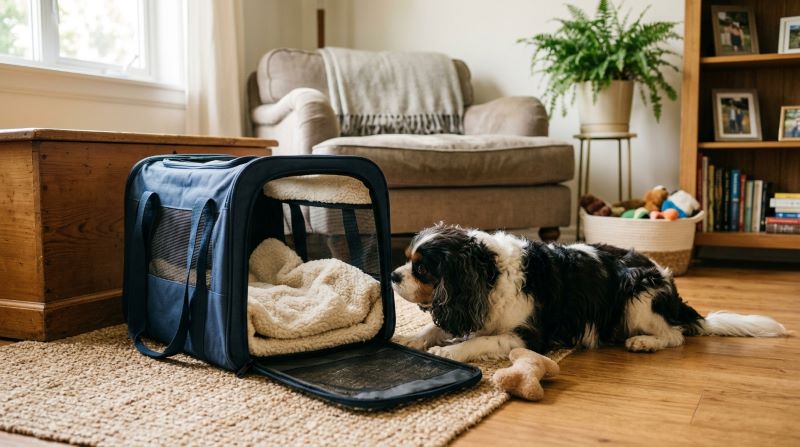
Leave the carrier open in a room your pet uses regularly with familiar bedding inside. Let them explore it before you ever close the door, then gradually extend time inside over several sessions. For car travel, build tolerance the same way — short drives first, then longer ones.

Tip 2: Schedule a Vet Check-Up Before the Move
Book a vet appointment four to six weeks before departure. Your vet will assess fitness for travel, update any lapsed vaccinations, and issue the documentation needed for interstate movement.
According to the USDA Animal and Plant Health Inspection Service (APHIS), each destination state sets its own animal entry requirements, which may include a health certificate, vaccinations, or diagnostic testing. Some states require health certificates completed no more than 10 days before travel, so checking requirements early is essential. Ask your vet about calming options for transit at this same visit.
How to Choose the Right Travel Method and Equipment
Tip 3: Choose the Best Mode of Travel for Your Pet
Driving is the lower-stress option for most pets on domestic long-distance moves. 87% of pet travelers choose car travel, and the reasons are straightforward: you control the pace, the temperature, and the stops. If flying is necessary, research airline policies carefully before booking, as rules on in-cabin versus cargo, breed restrictions, and documentation vary widely between carriers.
Tip 4: Make Sure Your Pet's Travel Carrier Is Safe and Comfortable
The carrier is your pet's entire world during transit. For car travel, secure it so it can't shift during braking. For air travel, it must meet the IATA Live Animals Regulations. Never use a soft-sided carrier for cargo air travel. Rigid carriers are required and provide structural protection; soft ones cannot.
Whichever mode you're using, the carrier should have:
- Adequate ventilation on at least two sides
- Enough room for your pet to stand, turn, and lie down
- A non-slip mat or familiar bedding on the floor
- A secure latch that cannot open accidentally
- Your contact information and your pet's ID tag attached to the outside
How to Keep Your Pet Safe and Comfortable During the Journey
Tip 5: Keep Your Pet Hydrated and Fed on Long Journeys
Dehydration is a genuine risk, especially in warm weather or during flights. Attach a water dish to the inside of the carrier door and offer water at every stop. For driving, plan breaks every two to three hours.
Avoid a large meal within three to four hours of departure to reduce motion sickness risk. A light meal beforehand is fine. During stops, keep your pet on a leash even in enclosed areas, and never leave them in a parked car in warm weather.
Tip 6: Pack Essentials for Your Pet's Comfort During the Move
Your pet needs their own essentials bag that travels with you, not on the truck. Include:
- Food for the full trip duration, plus two extra days' supply
- Collapsible water bowl and fresh water
- Waste bags, litter, and litter box (for cats), cleaning supplies
- Leash, harness, and collar with current ID tags
- Medications with dosing instructions
- A familiar toy or blanket carrying your pet's scent
- Copies of vaccination records and health certificates
Scent items are easy to skip, but they genuinely reduce anxiety. Animals orient heavily through smell, and something familiar from home helps in a disorienting environment.
How to Handle Emergencies and Help Your Pet Settle In
Tip 7: Be Prepared for Emergencies and Stress
Before you leave, save the contact details of at least two emergency vet clinics: one near your route midpoint and one near your destination. Bring extra medication if your pet takes any.
Know the signs that require immediate veterinary attention: persistent vomiting or diarrhea, labored breathing, collapse, or prolonged unresponsiveness. For lower-level anxiety, pheromone sprays (Adaptil for dogs, Feliway for cats) or calming wraps can help. Discuss these options with your vet before the move so they're in your bag, not on a list.
Tip 8: Help Your Pet Settle Into the New Home
Arrival isn't the finish line for your pet. A new home is full of unfamiliar smells and sounds, and adjustment takes days to weeks.

Set up a dedicated space with their bed, familiar toys, and food bowls before unpacking anything else. Keep them in that room during the bulk of the move-in process. Then introduce other areas gradually over several days, keeping feeding times and routines as consistent as possible. For moving long-distance with pets, routine is the fastest path back to normal behavior.
What It Really Takes to Move Pets Long-Distance Without the Stress
The 8 tips above come back to one point: treat your pet's needs as a separate, parallel planning track from the start. Start carrier training early. Book the vet before anything else. Pick the right travel mode. Pack a dedicated essentials bag. Plan your stops. Know your emergency contacts. Give them space to adjust on arrival.
Moving long-distance with pets tips all point to the same conclusion: with the right preparation in place, the journey is manageable for your pet and far less stressful for you.
Planning a long-distance move?
BoxStar Movers handles packing, transport, and storage so you can focus on getting your family, pets included, settled safely. Get your free quote today.
Frequently Asked Questions
What should I do if my pet gets sick during the move?
Pull over and assess your pet's condition. For persistent vomiting, labored breathing, or collapse, contact an emergency vet along your route. Save clinic numbers in advance so you're not searching mid-journey.
How can I keep my pet calm during a long car ride?
Acclimate your pet to car travel through short practice drives starting several weeks before moving day. During the trip, use familiar bedding, stop every two to three hours, and consider a pheromone spray. For severe anxiety, ask your vet about short-term calming medication beforehand.
What are the common mistakes to avoid when moving pets?
The most frequent mistakes are starting preparation too late, skipping the vet appointment, not checking destination state entry requirements, feeding a large meal before travel, and packing pet essentials into the moving truck instead of keeping them accessible.
How long before the move should I start preparing my pet?
Start four to six weeks out. This covers carrier acclimation, vet visits, vaccination updates, and documentation. For international moves or states with specific entry requirements like Hawaii, allow eight to twelve weeks.
Can I fly with my pet internationally?
Yes, but it requires significant advance planning. According to USDA APHIS, destination countries set their own requirements, which can include a USDA-endorsed health certificate, rabies titer testing, microchipping, and quarantine. Start working with an accredited vet as soon as your destination is confirmed


.webp)