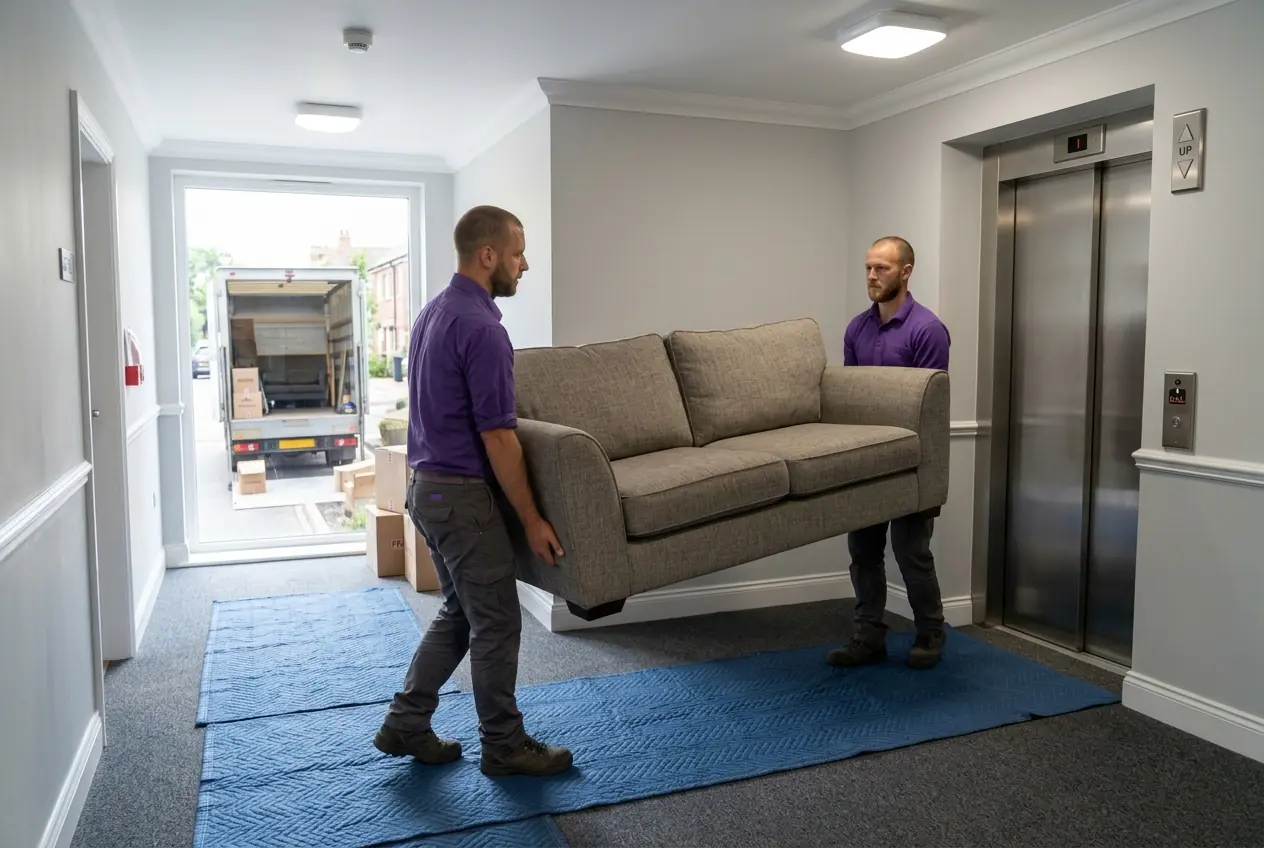
Do Movers Disassemble Furniture? Here’s What to Expect
Yes, many professional moving companies disassemble and reassemble furniture, but the exact services depend on the company, the type of furniture, and the moving agreement.
Some pieces need to come apart before transportation, since they will not fit through doorways or travel safely otherwise. Others can be moved intact, and taking them apart only adds risk. The goal is a safe carry with the least handling, and a good crew decides piece by piece.
Get the details in writing. For interstate moves, the FMCSA notes that adding items or services can change an estimate, so confirm disassembly before you book.
Do Professional Movers Disassemble and Reassemble Furniture?
Yes, furniture disassembly is a common part of professional moving, particularly for beds, large tables, and pieces that cannot fit safely through doorways or stairwells. Many movers assemble and disassemble these pieces as part of a standard move, using hand tools and furniture pads. Disassembly also protects walls, doorframes, and the furniture itself.
Basic disassembly is often included in the moving service, while complex furniture may need extra labor or specialist help. Movers also typically reassemble furniture at the destination, which is why you should confirm it when requesting an estimate. Reassembly takes time, and time is often what an estimate is built on.
Ask about these details up front:
- Which pieces will be taken apart, and which will move intact
- Whether disassembly and reassembly are included or billed separately
- Whether the crew will reassemble at the new home
- Who handles complex or electrical pieces
BoxStar Movers includes furniture disassembly and reassembly assistance as part of its local moving services, so the crew handles it as part of the job.
- Tip: Ask for the estimate to list disassembly and reassembly by piece, so nothing is left to assumption. If a company does not mention it, ask directly.
Use the table as a starting point, not a promise. Each company and each piece is different, so the crew's judgment on the day matters.
What Types of Furniture Will Movers Take Apart?
Movers most often take apart beds, large tables, sectionals, wardrobes, and bookshelves, along with other pieces that cannot fit or travel safely intact. Each type has its own considerations.
Beds and Bed Frames
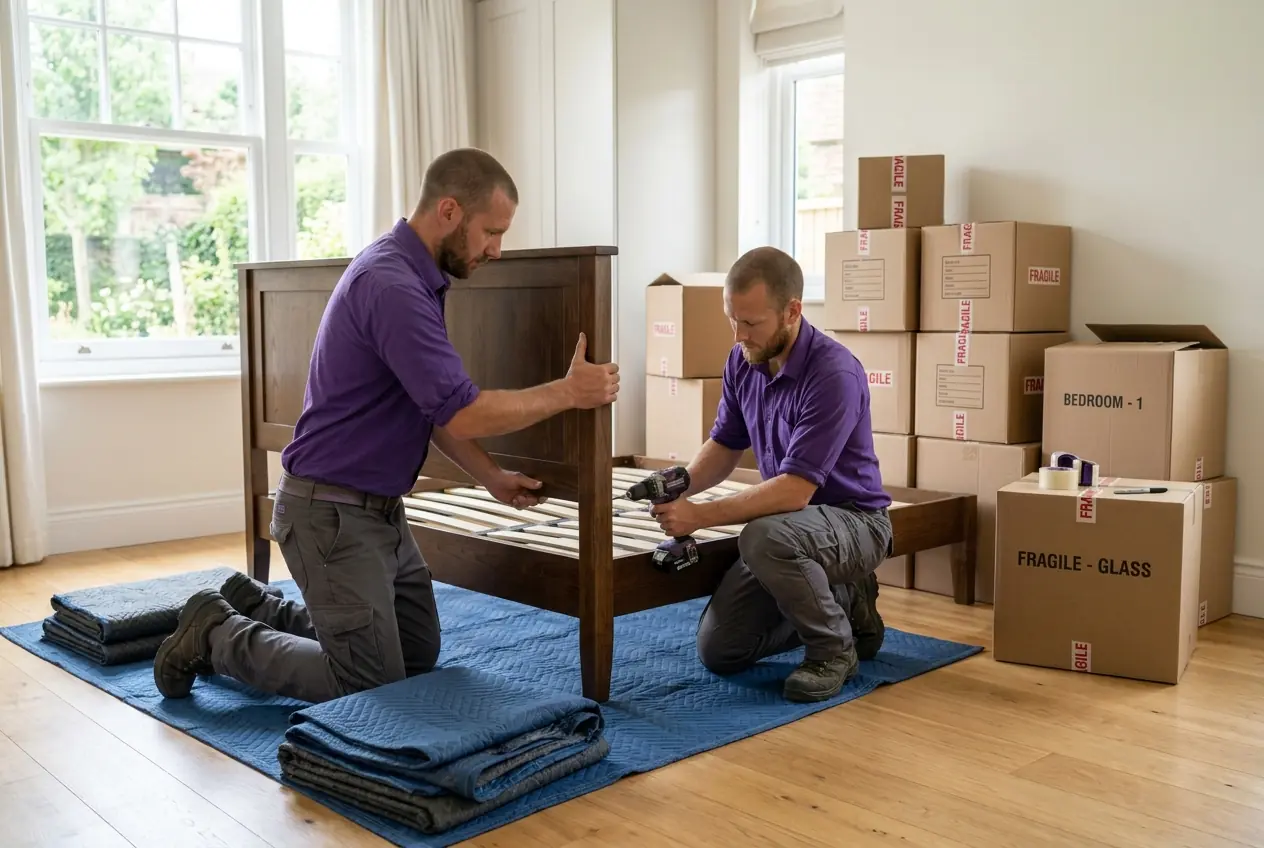
Standard frames, headboards, footboards, and removable slats come apart with basic tools such as a screwdriver, an Allen key, or a socket wrench.
Large frames are usually taken apart because they are heavy and awkward to carry through stairs and doorways. Removing the slats and rails also lets the crew pad each part and stack them flat in the truck.
Bolts and brackets go into a bag taped to the headboard, so reassembly starts with every part in one place.
Some beds need extra attention:
- Storage beds, which have drawers or lifting mechanisms
- Bunk beds, with heavy rails and ladders
- Adjustable beds, which have an electrical base
Tell the company about these before the estimate, since they can add time and may need a specific procedure.
Dining Tables and Large Desks
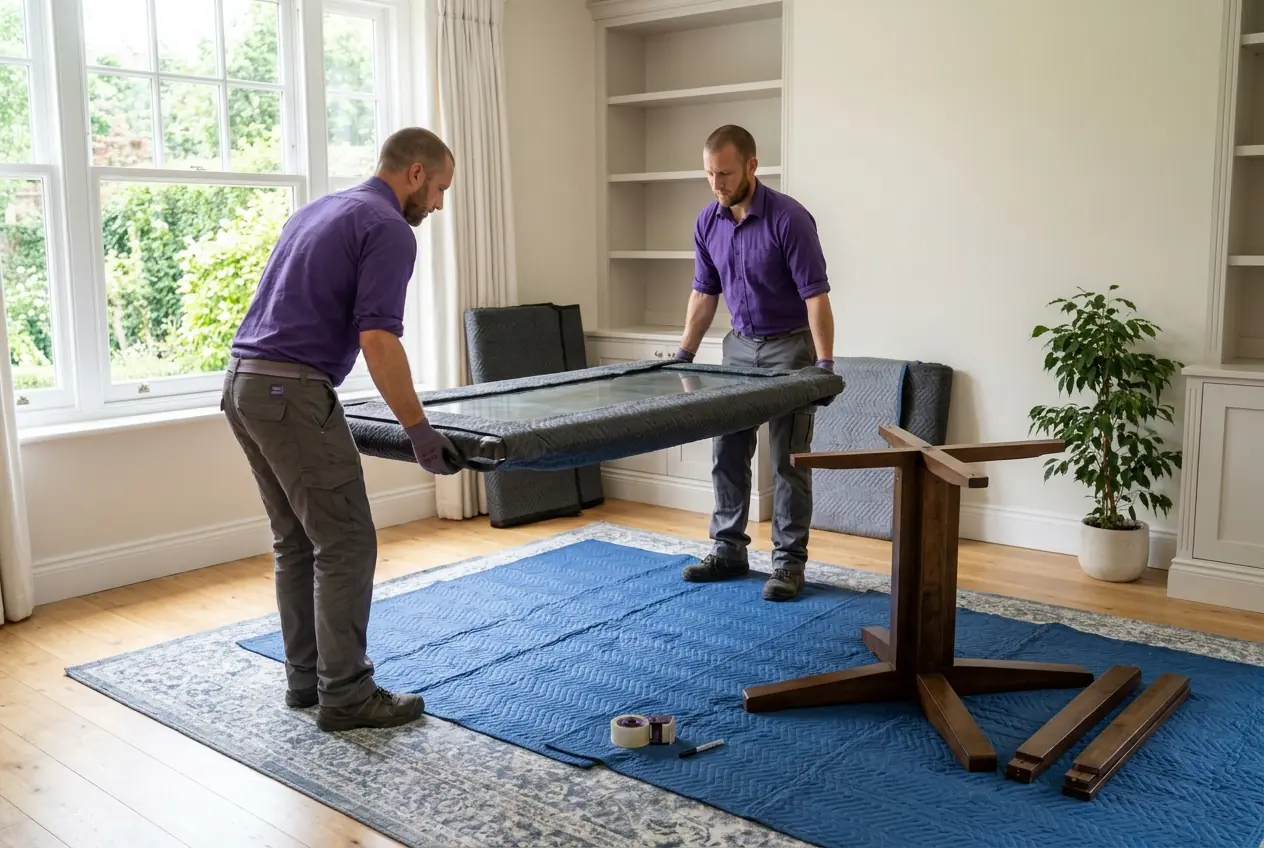
Crews often remove table legs or detachable sections to fit through narrow spaces, and tables with leaves are easier to carry once the leaves are out.
Glass tabletops are handled separately and padded, since they are fragile and heavy, and they should never be stacked under other pieces.
A cracked top is a very costly mistake, so many crews wrap glass in thick padding and carry it upright.
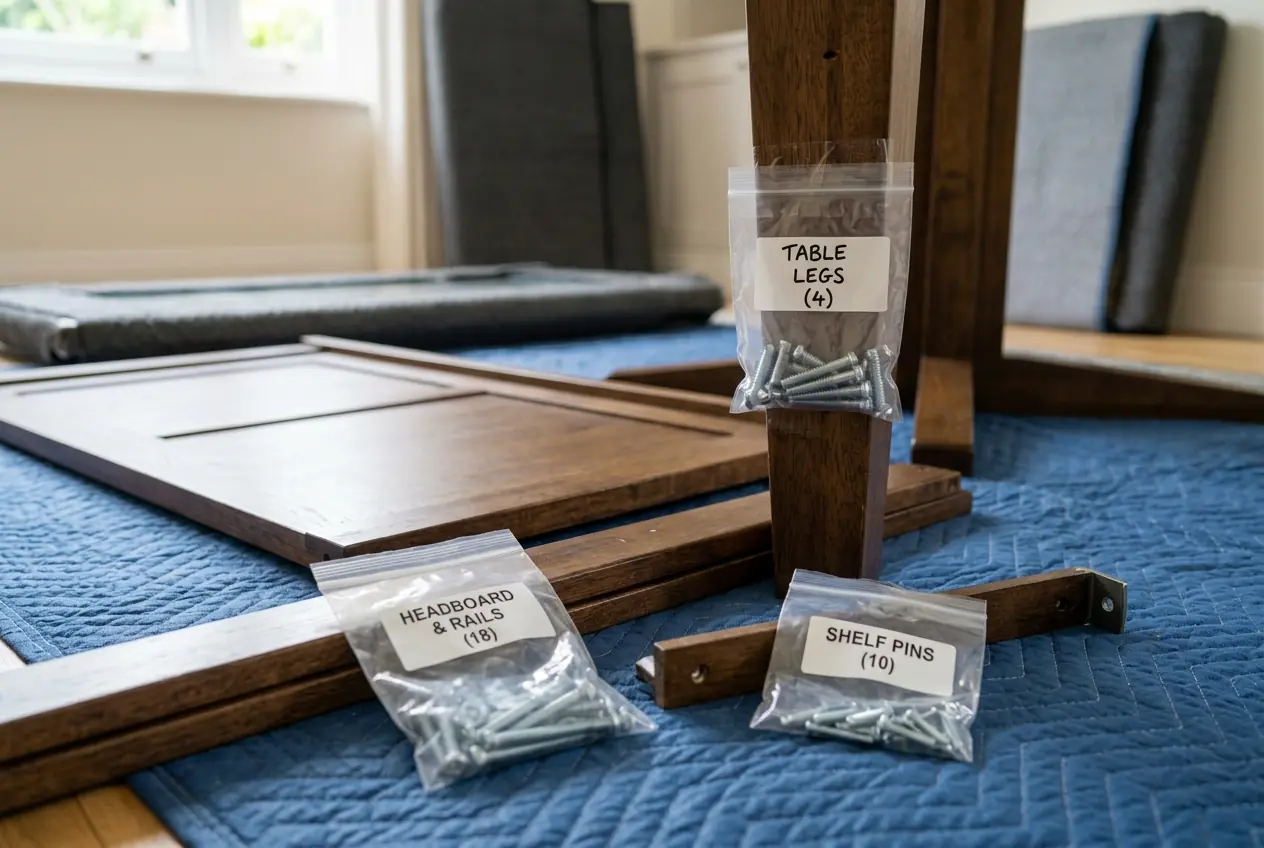
Complex office desks and modular workstations may need extra preparation. This is where movers disassemble and assemble the most pieces, so labeling parts matters. Table legs, leaves, and brackets should be bagged and taped to the underside of the tabletop or base.
These tips on office furniture moving services explain what to check before booking.
Sofas, Sectionals, and Recliners
Modular sectionals can be separated into pieces, and detachable legs or arms may come off. Not every sofa can or should be taken apart, since many frames are glued or stapled and could weaken. A sofa that clears the doorway by a few inches is usually safer left whole than forced apart.
Before taking anything apart, crews often test whether a sofa clears the doorway by tilting or removing legs. Recliners add complications from reclining mechanisms and built-in electrical components. Power recliners should be unplugged and handled with care, and many are moved intact if they fit, with the footrest closed and the cord secured.
Wardrobes, Bookshelves, and Large Cabinets
Crews can remove shelves, doors, and detachable sections when needed. Solid furniture usually tolerates this better than flat-pack furniture, which may not survive repeated disassembly because cam locks and pre-drilled holes can wear out. Tall wardrobes are often easier to carry once doors and shelves are out, and removing mirrors from wardrobe doors prevents breakage.
Some large cabinets travel best intact if access is safe. After reassembly, anchor tall pieces to the wall, since the Consumer Product Safety Commission's Anchor It! campaign recommends securing top-heavy furniture to prevent tip-overs. Check that every screw and cam lock is tight before loading the shelves again.
Flat-pack wardrobes deserve extra care. If the original hardware is worn, replacement fasteners from the manufacturer are a better choice than improvised ones.
Other Furniture That May Require Disassembly
Several other pieces may need to come apart, and each has its own quirks:
- Large entertainment centers and modular storage systems
- Cribs and other nursery furniture
- Exercise equipment
- Furniture with electrical or mechanical components
Exercise equipment, for instance, can have heavy weight stacks and cables that need careful handling. For some of these, manufacturer instructions or a specialist technician may be required. Cribs, for example, should be reassembled exactly as the manufacturer directs, with all hardware tightened and no parts missing.
These specialized moving services explain who needs them.
- Tip: Photograph complex assemblies before taking them apart, and keep hardware in labeled bags taped to each piece.
What Furniture Will Movers Usually Not Disassemble?
Movers usually do not take apart built-in furniture, complex mechanical or electrical pieces, or fragile and structurally unstable items. Knowing this early lets you plan around it.
Built-In or Permanently Installed Furniture
Wall-mounted cabinets, fitted wardrobes, and custom installations are part of the property, and they may belong to the landlord or the next owner. Removing them may require carpentry or other specialist work, and repairs to walls or floors afterward.
Moving furniture is different from modifying the home itself, so movers typically leave permanent installations in place unless a contractor removes them first. If you want a built-in piece to come along, ask a carpenter about removal well before moving day.
Complex Mechanical or Electrical Furniture
Several pieces involve wiring and motors, so extra care applies:
- Adjustable beds
- Motorized desks
- Advanced reclining systems
Electrical components must be disconnected safely, and some items require manufacturer-approved disassembly. Unplug and tape down cords so nothing drags or snags during the carry.
Check the manual or the manufacturer's support line before moving day. Movers can then work from correct instructions, and you avoid damaging a motor or a control box that may be costly to replace.
Fragile or Structurally Unstable Furniture
Antiques, damaged pieces, and certain particleboard constructions can lose strength when taken apart. Old glue, brittle joints, and swollen particleboard rarely survive a second assembly. Taking them apart risks weakening joints or damaging materials, so movers may recommend alternative handling or decline a particular task.
- Note: A mover who declines a task is usually making a safety call. Ask for the safest alternative, such as moving the piece intact.
For valuable pieces, white-glove moving provides extra care in handling and protection.
When Taking Furniture Apart Makes Moving Safer
Not all furniture needs to be disassembled, but taking apart certain pieces makes transportation safer and more manageable. Smaller parts are easier to carry, easier to pad, and less likely to scrape walls or doorframes.
You can help the crew by emptying drawers, clearing shelves, and removing anything fragile from the tops of furniture before they arrive. Point out any piece with a loose joint, a missing screw, or a past repair, since those pieces need gentler handling.
Furniture that moves intact needs less handling and fewer chances for a joint to loosen, and it saves reassembly time at the other end. The decision should always weigh how the piece is built, not just how large it is.
A simple rule works well: take apart what is too big to carry safely, and leave intact what is sound and fits.
These tips for how to prepare furniture for long-distance moving apply to local moves as well.
BoxStar Movers offers furniture disassembly and reassembly assistance as part of its moving services, so customers do not have to handle it alone. That means fewer tools to borrow, fewer parts to track, and less risk of a mistake.