The First 7 Things to Do After Moving Into a New House
The National Fire Protection Association has found that nearly half of home fires where a smoke alarm failed to sound happened because the batteries were dead, missing, or disconnected, a detail Consumer Reports flags as especially common in newly purchased homes.
It is a small reminder that the move is not actually finished when the last box comes through the door.
The first few hours in a new home are easy to spend tearing into boxes, but that instinct usually works against the household rather than for it. A short list of practical priorities, handled before the unpacking marathon begins, protects the home, the people in it, and the belongings still sitting in boxes.
Figuring out what to do after moving into a new house is less about a perfect checklist and more about sequencing: safety and function first, boxes second. These are the first things to do after moving into a new house, in the order they tend to matter most.

1. Walk Through the House Before Unpacking
Check for Damage or Problems Left Behind
Walking every room before boxes and furniture pile up makes it far easier to spot anything wrong. Households that followed a pre-move house checklist at the old address tend to bring the same careful eye to inspecting the new one. A few areas deserve a close look:
- Walls, floors, ceilings, doors, and windows for damage
- Plumbing fixtures for leaks or slow drains
- Appliances that were included with the house
- Any visible damage that was not present during the final inspection
Photographing existing issues on the spot creates a record that is genuinely useful later, whether that means filing an insurance claim, following up with a seller, contacting a landlord, or scheduling a contractor.
Confirm That Your Belongings Arrived as Expected
Checking the moving inventory against what actually got delivered is easiest while the movers are still there.
Flagging missing, damaged, or visibly compromised items before the crew leaves gives everyone a chance to sort it out on the spot rather than after the fact, when it becomes a matter of memory instead of a shared walkthrough. Damaged boxes and any related paperwork are worth keeping rather than tossing immediately, in case a claim needs to be filed later.
2. Make Sure Utilities and Essential Systems Are Working
Test Electricity, Water, Gas, Heating, and Cooling
Confirming that essential utilities are actually active should happen early, not as an afterthought. A quick pass through the house should cover:
- Lights and outlets in every room
- Faucets and toilets, checked for both function and leaks
- Heating and air conditioning, tested through a full cycle
- Hot water at more than one fixture
- Any major appliances left at the property
Tip: Anything that does not work correctly, like a dead outlet or a heating system that will not turn on, is worth addressing immediately rather than waiting until after unpacking, since these issues tend to get harder to trace once boxes are covering the space around them.
Connect the Internet and Other Essential Services
Internet access is worth prioritizing early, especially for anyone working from home or still handling move-related logistics online, from updating accounts to scheduling repair appointments.
It is also worth double-checking that any service appointments already scheduled, whether for internet, cable, or utility hookups, are still on track for the expected date, since a missed installation window can mean another week without service.
3. Secure the House Before Settling In
Change or Rekey Exterior Door Locks
Previous occupants, contractors, cleaners, dog walkers, or even a past owner's real estate agent may still have a working key to the house. Rekeying or changing locks on every exterior access point closes that gap quickly:
- Front and back entry doors
- Garage entry doors
- Side doors or mudroom entrances
- Any other exterior access points
Check Windows, Garage Doors, and Other Entry Points
Every window should close and lock properly, not just the ones that get used regularly. Testing garage door access and giving exterior doors a quick inspection for obvious security problems rounds out this step.
This is also a reasonable moment to consider whether additional locks, exterior lighting, or a security system make sense for the property.
4. Find the Important Shutoffs and Safety Equipment
Locate the Main Water, Gas, and Electrical Shutoffs
Knowing where the main water shutoff, the electrical panel, and the gas shutoff are located, if the home uses gas, matters far more in an emergency than during a calm afternoon. Every adult in the household should know these locations before something goes wrong, not while water is actively spreading across the floor.
Note: A leak, an electrical issue, or a gas smell all become far less stressful to handle when the shutoff location is already known instead of being searched for in a panic.
Check Smoke and Carbon Monoxide Detectors
Testing every smoke and carbon monoxide detector in the house is a five-minute task that is easy to skip and genuinely important not to. Replacing batteries or full units where needed, and confirming a fire extinguisher is present and accessible, rounds out the basic safety check for the first day.
5. Set Up One Functional Room First
Create a Comfortable First-Night Space
Unpacking randomly, room by room, tends to leave every room half-finished by bedtime. A better approach is making one space, generally the bedroom, fully usable first. A comfortable first night comes down to a short list:
- A working bed or sleeping arrangement
- Basic lighting that actually works
- Phone chargers within reach
- At least one chair or seating option
- Curtains or a temporary privacy solution for windows
Prepare the Bathroom and Basic Kitchen
At least one bathroom should be fully functional, and the kitchen needs just enough set up for water, coffee, a simple meal, and basic cleaning. This is one of the first things to do after moving into a new house that pays off immediately, since having this one usable base in the house makes the rest of the unpacking process feel far less disruptive.
6. Unpack the Essentials Before Everything Else
Open the Boxes You Will Need Immediately
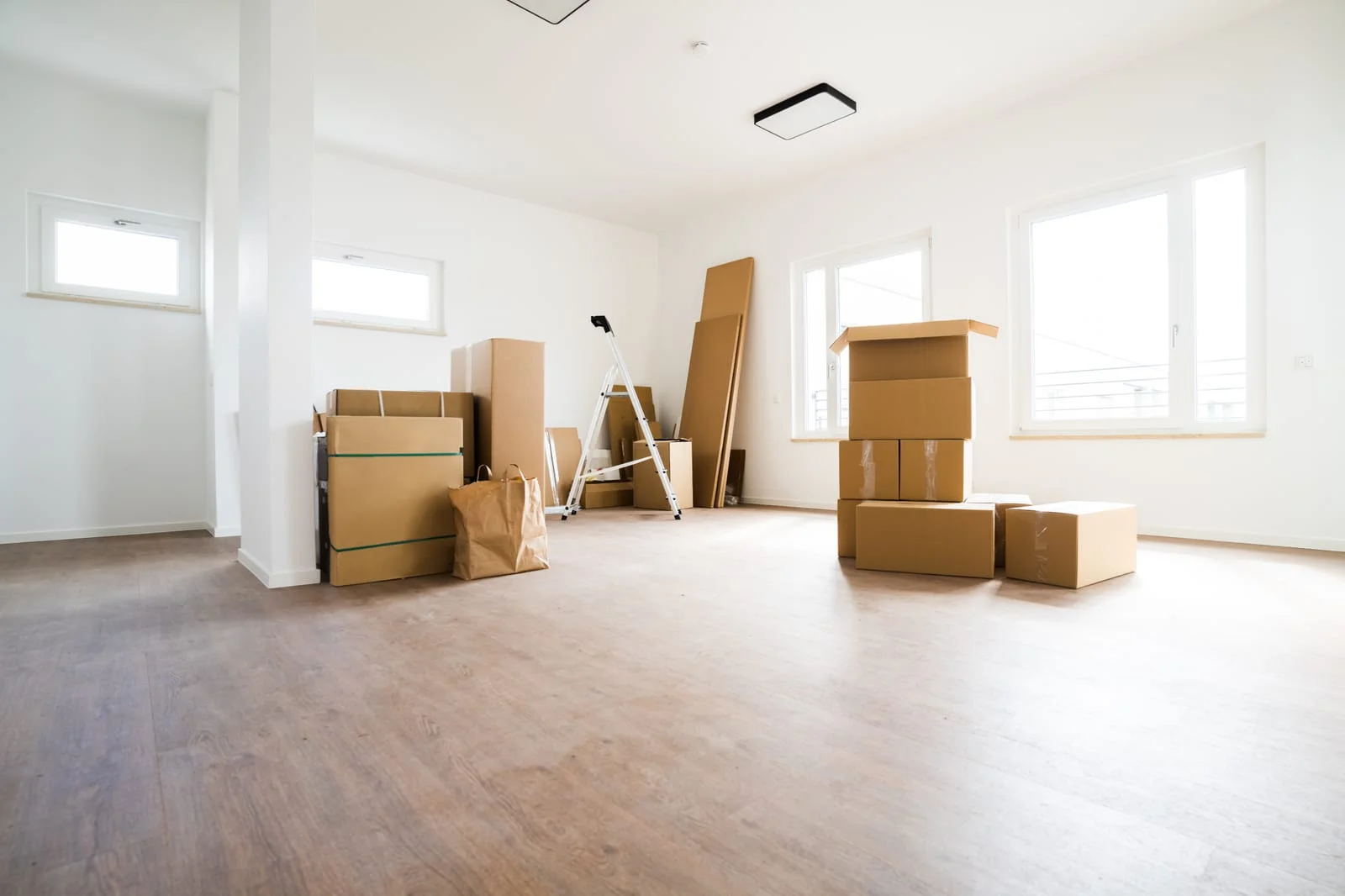
Certain boxes deserve to be opened long before the rest of the house gets touched. Priority items typically include toiletries, medications, a few days of clothing, bedding, towels, basic kitchen supplies, important documents, and chargers or electronics.
Tip: A labeled essentials box, packed last and unpacked first, is one of the simplest ways to avoid digging through a stack of unmarked cartons on the first night.
Keep Important Items Accessible
Documents, valuables, and everyday necessities have a way of getting buried under boxes if there is no plan for them. Setting up one temporary spot, a drawer, a basket, or even just a designated corner of a counter, for keys, wallets, paperwork, moving documents, and small valuables keeps them findable while the rest of the house gets sorted out.
7. Handle Immediate House and Address Tasks
Update Your Address Where It Matters Most
Not every address change needs to happen on day one, but a few accounts are worth prioritizing since incorrect information there can cause real problems. The short list includes:
- Banks and other financial accounts
- Insurance providers
- Government records, including a driver's license or voter registration
- Employers, for payroll and benefits purposes
- Any subscriptions tied to billing or delivery addresses
Check What the House Needs Before Starting Bigger Projects
The walkthrough from day one usually turns up a short list of repairs, purchases, and possible improvements, which is a normal part of figuring out what to do after moving into a new house rather than a sign that something went wrong. Sorting that list into urgent repairs, basic necessities, and cosmetic projects keeps priorities clear.
Following a rough moving budget helps decide what actually needs attention now versus what can wait. Major renovations are generally better left until after the household feels settled, unless they were already planned before move-in.
Settling In Without the Pressure to Unpack Everything at Once
The first day in a new house works best when it focuses on function, safety, and security rather than a perfectly unpacked home. Walking through the house, confirming utilities, securing the property, locating shutoffs and safety equipment, setting up one working room, unpacking the essentials, and handling the most urgent address and repair tasks cover the things to do after moving into a new house that actually matter before anything else.
Once those seven priorities are handled, the rest of the unpacking and organizing can happen gradually, without the pressure of getting it all done on day one. For anyone who used professional movers, services like packing, unpacking, furniture assembly, and storage can take a real chunk of the remaining things to do after moving off the household's plate entirely.
Ready to Make Moving Day Easier?
Knowing what to do after moving into a new house is only half the equation. The other half is arriving with less left to handle in the first place.
Get a free quote from BoxStar Movers, including packing and unpacking support that leaves less to handle after arrival.