How to Transport Plants When Moving Long Distance? The Do's and Don'ts
April 17, 2026
April 17, 2026
According to the USDA Animal and Plant Health Inspection Service, U.S. Department of Agriculture, 2024, transporting plants across state lines is subject to strict federal and state agricultural regulations designed to prevent the spread of invasive pests and diseases that can damage local ecosystems and crop industries.
That regulatory layer is just one reason moving long distance with plants requires more planning than most people expect. Plants respond visibly to stress: they wilt under heat, drop leaves in the dark, and suffer root damage when left in waterlogged soil for days. Without proper preparation, even hardy houseplants arrive weakened. This guide covers the essential do's and don'ts for transporting plants when moving long distances.
Why Moving Plants Long Distance Is More Challenging Than It Looks
Plants are highly sensitive to the exact conditions that a long-distance move disrupts most: temperature, light, humidity, and routine. A typical interstate drive can take one to three days, during which a plant may sit in a dark car, experience temperature swings at every rest stop, and go without its normal watering schedule.
Environmental shifts compound the problem. Moving from a humid Southern climate to a drier Southwest region, or from a warm state to a colder one, stresses even well-established plants. Add road vibration, physical jostling, and the possibility of state border inspections, and it is clear why moving house plants long distance benefits from deliberate preparation.
The Do's: Best Practices for Moving Plants Long Distance
Do 1: Choose the Right Type of Container for the Journey
The container your plant travels in has a direct impact on how it arrives. Heavy ceramic pots are dense, prone to cracking under pressure, and add significant weight. For moving plants long distances, switching to lightweight plastic or fabric pots two to three weeks before the move gives the plant time to adjust. If repotting is not practical, secure existing pots inside snug cardboard boxes lined with packing paper to prevent tipping and keep the root ball intact.
Do 2: Prepare Your Plants Ahead of Time
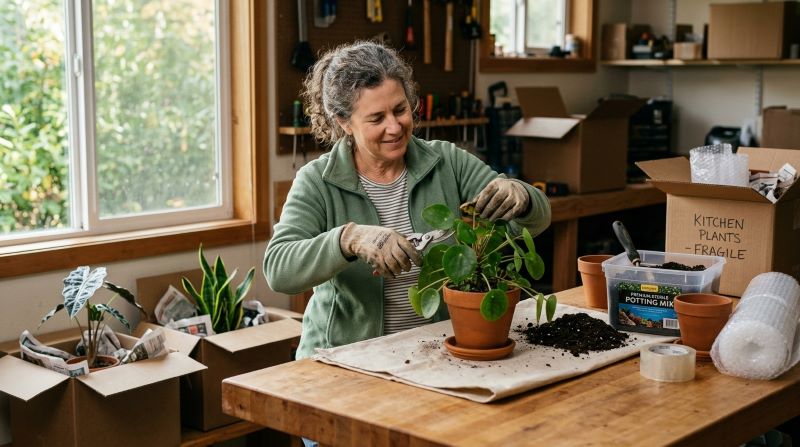
Start preparing your plants two to four weeks before moving day. This window matters because plants that are pruned, repotted, or treated for pests too close to the move are already stressed when they get into the vehicle.
Here's what preparation in advance looks like in practice:
- Prune dead or overgrown stems to reduce the plant's size and minimize breakage risk during transport
- Repot any plants with compacted or pest-affected soil into fresh, sterile potting mix (required by several states anyway)
- Treat any visible pest issues well before the move, so plants arrive free of infestation
- Gradually reduce watering in the final week to avoid waterlogged soil during transport
- Acclimate sun-loving plants to slightly lower light conditions if they'll be in a covered vehicle for multiple days
Do 3: Pack Plants Vertically and Securely
Plants should always travel upright. Laying them on their side stresses the root system and can snap stems or displace soil in ways that cause lasting damage. Use open-top boxes sized close to the pot diameter, place heavier pots low in the car, and use non-slip mats or wedged boxes to prevent shifting during braking and turns. For taller plants, secure the main stem to a bamboo stake with soft ties before boxing.
Do 4: Maintain Temperature and Humidity Stability
Temperature is the variable most likely to harm plants during a long-distance move, and it's the one most often overlooked. The following table shows the main environmental risks and how to manage them:
If your move spans more than one day, bring plants inside at every overnight stop. A car interior can drop to damaging temperatures overnight, even in mild weather.
Do 5: Label Plants for Easy Identification and Care
Labeling is a small step that prevents real problems at the destination. When every plant is boxed and stacked in a moving vehicle, it is easy to lose track of which species needs what care. Write the plant's name, watering frequency, and any light requirements directly on the box or on a tag attached to the pot.
The Don'ts: Common Mistakes to Avoid When Moving Plants Long Distance
Don't 1: Don't Overwater or Underwater Your Plants Before the Move
Watering timing is one of the most common mistakes in moving plants long distances. Overwatering in the days before a move leaves soil waterlogged and heavy, creates conditions for root rot during transit, and adds unnecessary weight. Underwatering causes the root ball to dry out and shrink, making the plant fragile and prone to transplant shock on arrival.
Water your plants normally up until about four to five days before the move, then let the soil approach dryness without fully drying out. This reduces weight, lowers rot risk, and leaves the root system in a stable condition for the journey.
Don't 2: Don't Expose Plants to Extreme Temperatures or Direct Sunlight
A sealed car in summer sun can reach over 130°F within minutes. Even brief exposure at these temperatures can kill most houseplants. Direct sunlight through car windows intensifies this effect and can burn leaves even at moderate outside temperatures.
Keep plants in a ventilated area of the vehicle with indirect light. If traveling in winter, never leave plants in the car overnight. Cold damage to tropical plants begins below 50°F for many species and is often irreversible once it affects the root zone.
Don't 3: Don't Pack Plants Without Protection
Bare pots placed loosely in a moving truck or car will tip, shift, and collide with other items over hundreds of miles of road. Stems break, soil spills, and root balls get displaced in ways the plant may not recover from.
Every plant should be in a snug, upright container before loading. Use:
- Cardboard boxes cut to pot height to prevent tipping
- Crumpled packing paper or newspaper around the pot base to absorb vibration
- Soft ties or loosely wrapped stretch wrap around fragile stems if needed
- A non-slip mat or rubber shelf liner under each box
Don't 4: Don't Wait Until the Last Minute to Prep Your Plants
Plants that are repotted, treated, or pruned the day before a move are already in a weakened state when they get into the vehicle. Waiting until the last minute also leaves no time to identify pest problems, obtain the sterile soil required by some destination states, or allow plants to stabilize after any changes.
Start the preparation process at least two to three weeks out. For states with strict plant entry requirements, such as California, Arizona, Florida, and Hawaii, begin even earlier to allow time for repotting into certified sterile soil and obtaining any required documentation.
Don't 5: Don't Forget to Research Local Plant Regulations
This is the most consequential mistake on the list. The USDA does not regulate the interstate movement of houseplants carried by travelers, but each state has its own rules about the plants a traveler may bring from a different state. Ignoring these rules can result in plants being confiscated at state borders and potential fines.
Check the destination state's Department of Agriculture website before your move. States with the strictest regulations include California, Arizona, Florida, Hawaii, and Idaho. Common requirements include repotting into sterile commercial soil, pest-free certification, and, in some cases a phytosanitary certificate from your state's agricultural department. The National Plant Board publishes state-by-state regulation summaries that are updated regularly and are the most reliable source for current requirements.

How to Give Your Plants the Best Chance on a Long-Distance Move
The do's and don'ts above cover what moving long distance with plants actually requires: the right containers, timely preparation, proper packing, environmental management, and regulatory compliance. Each point needs to be addressed before moving day, not during it.
For delicate or high-value plants, a professional mover who understands live cargo handling adds an important layer of protection. BoxStar Movers offers comprehensive long-distance moving services with experienced crews, and flexible storage options if you need a gap between homes.
Planning a long-distance move with plants?
BoxStar Movers helps you move everything, from furniture to fragile items, with transparent pricing and professional care. Get a free quote.
Frequently Asked Questions
How do I pack plants for moving?
Place each pot in a snug cardboard box lined with packing paper to prevent tipping. Keep plants upright, secure taller stems with a stake and soft ties, and never seal the box shut. Pack plants in the car rather than the moving truck to maintain temperature and light control throughout the journey.
Should I remove plants from their pots before moving them a long distance?
For most houseplants, keep them in their pots. Removing plants from containers exposes roots to air and handling damage. The exception is when a destination state requires sterile soil: repot into certified commercial potting mix two to three weeks before the move so the plant stabilizes before transit.
How do I move a large or heavy plant long-distance safely?
Secure the pot firmly in a vehicle corner using non-slip matting and surrounding boxes to prevent shifting. For very large plants, a wooden crate built around the pot provides the most reliable protection. Some large specimens are easier to replace locally than to transport safely across hundreds of miles.
Are there specific plants that are easier to move long distances than others?
Succulents, cacti, pothos, snake plants, and other hardy low-water species tolerate transport stress well. Tropical plants with large, broad leaves and ferns with delicate fronds are the most vulnerable to temperature, humidity, and light disruption during long-distance travel.
Do I need special documentation for moving plants across state lines?
It depends on your destination state. While the USDA does not regulate houseplants carried by travelers at the federal level, individual states set their own entry requirements. California, Arizona, Florida, Hawaii, and Idaho have the strictest rules. Check the National Plant Board and your destination state's Department of Agriculture for current requirements before your move.

.webp)