6 Moving Tools You Need to Simplify Your Next Move
According to the Bureau of Labor Statistics, cited in NIOSH Ergonomic Solutions for Retailers, overexertion injuries account for approximately 30% of all occupational injuries that result in time away from work, with laborers and material movers experiencing the highest rate of any sector.
Moving day puts the same demands on the human body as any physical labor job, often on people who haven't trained for it. The combination of heavy lifting, awkward angles, staircases, and sustained physical effort over hours creates exactly the conditions where overexertion injuries occur. The right moving tools and equipment don't just protect your belongings from damage. They protect you from becoming a statistic.
This guide covers the 6 essential tools to make moving easier, how each one works, and how to use them together effectively for a safer, faster move.
Why Do the Right Moving Tools Make Such a Difference?
Most moving injuries and most item damage happen in the same scenario: one or two people trying to move something heavy by hand that should be moved with equipment. Without the right tools for moving, even experienced movers default to improvised techniques that increase injury risk and reduce control over the item.
The 6 tools below address the full range of moving tasks: lifting, sliding, protecting, carrying, securing, and disassembling. Used together and matched to the right items, they reduce the physical cost of a move and significantly lower the probability of damage.
What Are the 6 Essential Moving Tools You Need?
1. Moving Dollies
A moving dolly is the single most important piece of equipment for any move involving heavy items. An appliance dolly (also called a hand truck) has a vertical back support, a tilting base plate, and straps rated for loads of 400 to 700 pounds. A platform dolly is a flat, four-wheeled surface used to transport multiple boxes or wide furniture pieces.
Moving dollies are essential for:
- Refrigerators, washing machines, dryers, and large kitchen appliances
- Stacked boxes too heavy to carry individually
- Furniture pieces that are too heavy to lift safely with two people
When using an appliance dolly, slide the base plate fully under the item before tipping, secure the strap at the item's center of gravity rather than at the top or bottom, and always have a second person guiding from the front when navigating stairs. Never attempt to solo-dolly a refrigerator or large appliance down a staircase.
2. Moving Straps and Harnesses
Moving straps redistribute the weight of heavy items from your hands and lower back to your shoulders and legs, where the body is significantly stronger, and injury risk is lower. Forearm straps (also called lifting straps) allow two people to carry large furniture by looping the straps under the item and gripping the handles at forearm level. Shoulder harnesses distribute weight across both shoulders for stair-climbing scenarios.
Moving straps are particularly useful for:
- Sofas, bed frames, and large dressers
- Any item too large for a dolly to navigate through a doorway
- Staircases carry where a dolly is not practical
The most common mistake with lifting straps is failing to match the strap length to the height of both carriers. If one person is significantly taller than the other, the item tilts, control decreases, and the risk of dropping increases. Adjust the strap length before lifting so both carriers hold the item at the same level.

3. Packing Materials and Supplies
Packing materials are the tools that protect belongings in transit. The items in a well-stocked packing kit address every category of item and failure mode:
The packing tape dispenser is consistently underrated. Cutting tape by hand slows packing considerably and produces weaker seals. A dispenser speeds the process and applies consistent tension.
4. Furniture Sliders and Moving Blankets
Furniture sliders are small discs or pads placed under furniture legs or corners that allow heavy pieces to glide across floors with minimal effort. A sofa that requires four people to lift can often be repositioned by one person using furniture sliders on hardwood or tile. They eliminate the floor damage that dragging produces and drastically reduce the physical effort of moving large pieces short distances within a room or to the truck.
Moving blankets (also called furniture pads) are thick, quilted covers that protect furniture surfaces, door frames, and walls during loading and transport. Every wood, metal, and upholstered surface that passes through a doorway or travels on a truck should be covered with a moving blanket before it makes contact with anything else.
Use sliders and blankets together:
- Apply sliders under all four corners or legs of the piece.
- Wrap exposed surfaces in a moving blanket before moving begins.
- Guide the piece to the loading area, then transfer to a dolly or carry team.
- Keep blankets in place during the truck ride, secured with stretch wrap.
5. Toolkit and Assembly Equipment
Furniture disassembly is one of the most consistently overlooked parts of moving preparation, and the absence of the right tools on moving day causes delays that cascade through the entire schedule.
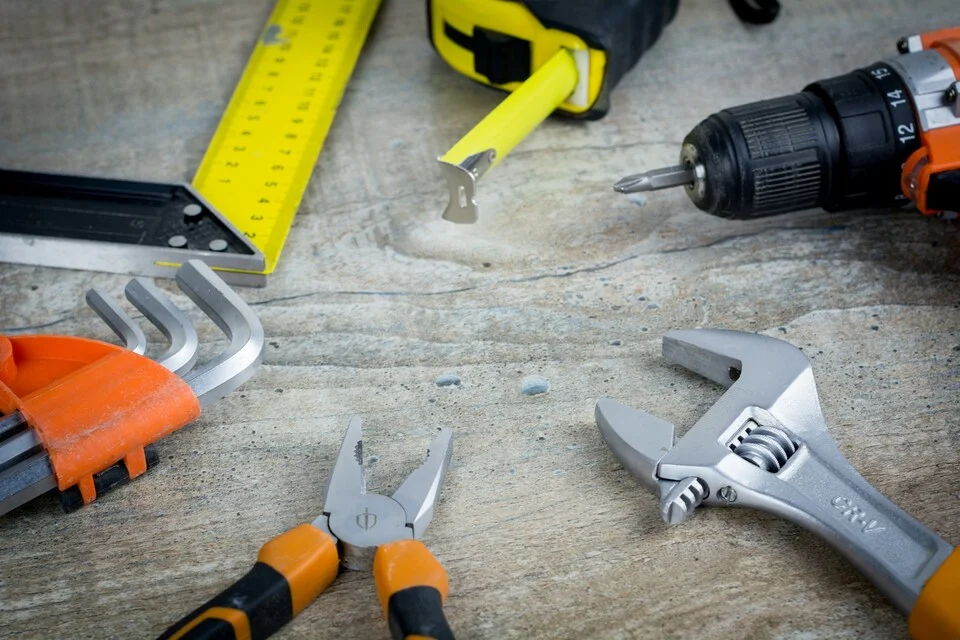
A moving toolkit should include:
- Flathead and Phillips screwdrivers in multiple sizes
- Allen key set (most flat-pack furniture uses hex bolts)
- Adjustable wrench and pliers
- Rubber mallet for stubborn joints
- Measuring tape for doorway and hallway clearance checks before moving day
- Zip-lock bags in multiple sizes for hardware, labeled by piece
- Permanent marker for labeling hardware bags
The hardware organization step is worth emphasizing. Screws, bolts, and brackets placed loosely in a moving box get mixed together and lost. Place all hardware from each disassembled piece in a labeled zip-lock bag and tape it directly to the item it belongs to. This eliminates the post-move hardware search that delays reassembly at the destination.
6. Moving Carts and Hand Trucks
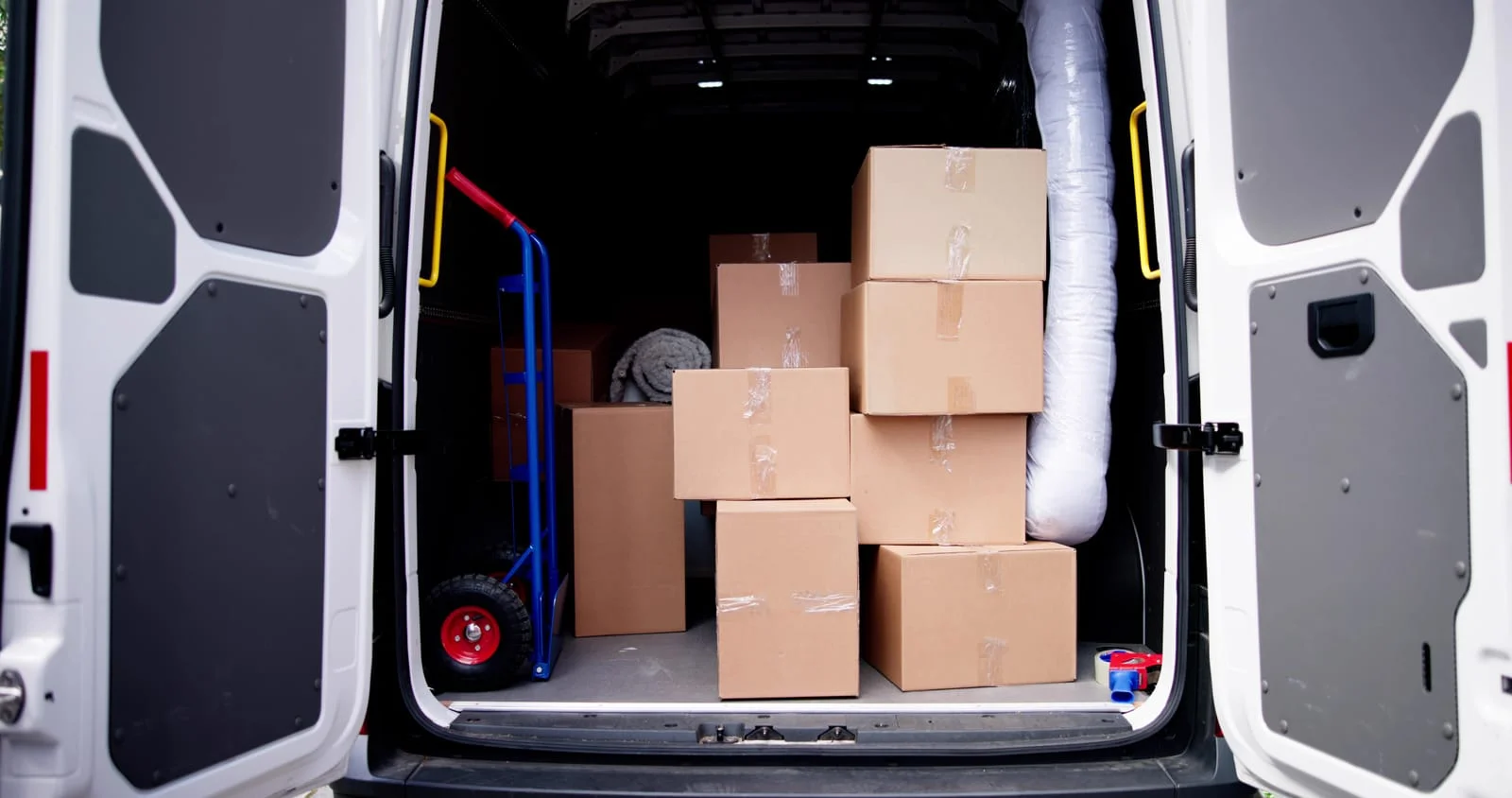
A standard hand truck (the L-shaped two-wheeled cart) is one of the most versatile tools to make moving easier. It handles boxes, small appliances, and medium-weight items that are too awkward to carry but too light to warrant a full appliance dolly.
For multi-story buildings or moves with many boxes, a four-wheeled moving cart with raised sides allows multiple boxes to be moved in a single trip, reducing the total number of passes between the truck and the apartment. Many moving truck rental companies include a hand truck in the rental. A moving cart typically needs to be rented or purchased separately but pays back its cost in time and effort saved over any move with more than 20 boxes.
Key hand truck practices:
- Load the heaviest items at the bottom, closest to the axle
- Keep the load balanced over the wheels rather than tipping back too far
- Use a bungee cord or strap to secure multiple boxes before moving
- On stairs, tilt the cart back at a low angle and pull rather than push for better control
How to Use Moving Tools Effectively Together
The 6 tools above work best when matched to the task and used in combination rather than applied one at a time.
A practical approach by item type:
- Heavy appliances: Appliance dolly with straps, moving blankets on all surfaces, furniture sliders for initial positioning, with straps in the truck
- Large furniture: Moving straps for carries, furniture sliders for repositioning, moving blankets for surface protection, a toolkit for disassembly
- Boxes: Hand truck or moving cart for transport, packing tape dispenser for sealing, permanent markers for labeling
- Fragile items: Bubble wrap and packing paper inside double-wall boxes, foam sheets for screens and electronics, clearly labeled orientation markings
Test new tools before moving day rather than learning to use them while carrying something heavy. Practice with a loaded dolly, adjust strap lengths with a test lift, and confirm that sliders are appropriate for your floor type.
The Right Moving Tools Turn a Physically Demanding Day Into a Manageable One
The 6 moving tools covered in this guide address every stage of a move where injury and damage risk are highest: lifting, carrying, floor transit, surface protection, truck loading, and disassembly. No single tool replaces the others, and the combination of all six produces a move that is faster, safer, and less physically punishing than the same move attempted without them.
For moves where the volume, distance, or item complexity exceeds what you can safely manage with the right tools and available help, BoxStar Movers' professional moving services bring the equipment, the trained crew, and the methodology that makes damage-free relocation consistent rather than lucky.
Moving soon?
BoxStar Movers provides trained crews, professional tools, and full-service moving with transparent pricing.
Frequently Asked Questions
Are there safety guidelines for using lifting straps and dollies?
For lifting straps, match the strap length between both carriers before lifting so the item stays level, bend at the knees rather than the waist, and communicate every step with your partner. For dollies, always secure the item with the dolly strap before tilting, keep the load within the dolly's rated weight capacity, and use two people on any staircase descent. Never let the dolly roll uncontrolled.
What tools are best for moving pianos or other unusually heavy items?
Pianos require a specialized appliance dolly with a wider base and higher weight rating than a standard hand truck, piano straps that distribute weight across the instrument's frame without contacting the keys or pedals, and moving blankets on all surfaces. For grand pianos, the legs and lyre assembly must be removed before transport, which requires a specific toolkit. For any piano move, BoxStar Movers' dedicated piano moving service is a safer option than improvising with general equipment.
How do professional movers choose which tools to use for specific items?
Professional movers assess each item before moving it: noting its weight, dimensions, fragility, and the path it needs to travel. Heavy appliances get appliance dollies. Large furniture gets moving straps or platform dollies. Fragile items get purpose-matched packing materials. Floors and door frames get blankets and cardboard runners before anything moves. The tool selection is item-specific, not generic.
How do I protect delicate electronics while moving?
Use original packaging when available. When it is not, wrap screens and bodies separately in foam sheets, then add a layer of bubble wrap and pack in a snug double-wall box with all gaps filled with packing paper. Label the box "Fragile," "This Side Up," and "Electronics" on two sides. Keep electronics in your car rather than the moving truck on hot days, as temperatures in a sealed truck can exceed the operating range of most devices.
What is the best way to keep screws and small parts organized during furniture disassembly?
Place all hardware from each piece in a separate labeled zip-lock bag immediately after removal. Write the piece name and destination room on the bag with a permanent marker. Tape the bag directly to the back or underside of the disassembled piece so it cannot be separated from it. Never combine hardware from different pieces in the same bag, even temporarily.