Step-by-Step Guide: How to Pack Books for Moving House
Moving house is one of those tasks that's easy to underestimate — until you're surrounded by piles of books and not a single box in sight. Books are heavy, awkward in odd sizes, and oddly sentimental. Done wrong, packing them can slow your entire move down. Done right, it takes less time than you'd think, and your collection arrives in perfect condition. This guide walks you through everything, step by step.
Introduction to Packing Books for Moving
Books are one of the trickiest things to move. They don't bend, they don't compress, and a single box packed carelessly can end up so heavy that two people struggle to lift it. On top of that, some books carry real sentimental or monetary value — the kind you really don't want arriving at your new home with a cracked spine or water damage.
The good news is that knowing how to pack books for moving doesn't require any special skills. It just takes a bit of planning, the right materials, and a clear method. Get those three things in place, and the whole process becomes much more manageable.
Why Packing Books Properly is Important
Books might seem sturdy, but they're more vulnerable than they look. Common packing mistakes include:
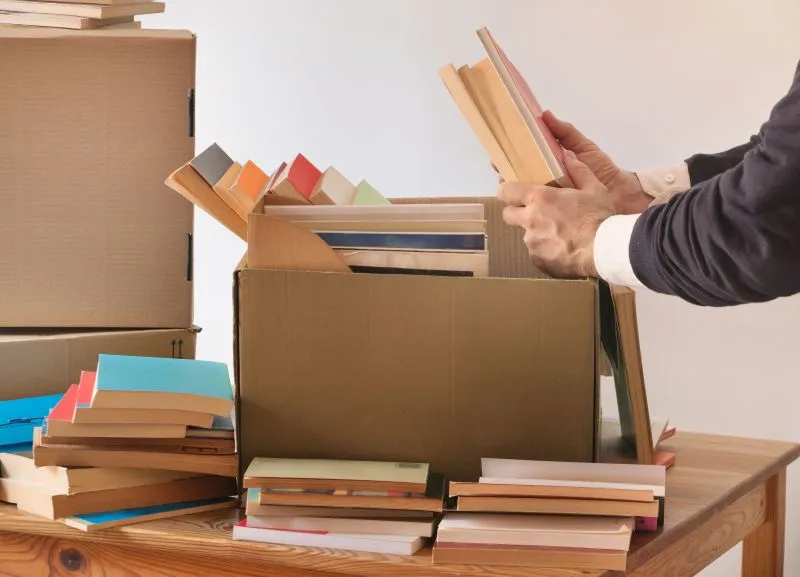
- Spine cracking: Hardbacks crack at the spine when stacked at an angle or on their side.
- Warping: Paperbacks warp when exposed to moisture or uneven pressure inside an overfilled box.
- Crushing: Mixing heavy hardcovers with thin paperbacks in the same box often leaves the lighter books bent.
- Box failure: Overloaded boxes can split at the base mid-carry — not ideal on a staircase.
Benefits of Organizing Your Books Before Packing
Taking time to sort before packing pays off in multiple ways:
- Fewer boxes: Culling books you no longer want means fewer items to pack, carry, and pay to transport.
- Easier unpacking: Grouping similar books together means you can set up new shelves without hunting through every box.
- Neater boxes: Books of similar size pack more efficiently, leaving fewer awkward gaps.
- Less stress on moving day: Clearly labelled, well-organised boxes are much quicker to load and unload.
Essential Packing Materials for Books
Having the right materials on hand before you start makes a noticeable difference. Trying to improvise with whatever boxes happen to be lying around is how books end up damaged or boxes end up failing mid-move.
Best Boxes for Packing Books
Not all boxes are equal when it comes to books. Here's what to look for:
- Small boxes only: Books are dense. A medium or large box packed full becomes dangerous to carry. Small boxes keep weight manageable.
- Double-walled cardboard: Worth the small extra cost — they hold their shape under heavier loads and through multiple lifts.
- Free alternatives: Supermarket or liquor store boxes originally used for canned goods or bottles are built for weight.
- Avoid damaged boxes: Any box with soft spots, previous water damage, or weakened corners should be skipped.
Packing Materials You'll Need
Gather these supplies before you start packing:
- Small, sturdy cardboard boxes (double-walled preferred)
- Packing tape and a tape gun for sealing bases and tops securely
- Packing paper or plain newsprint for wrapping books with dust jackets
- Bubble wrap for rare, antique, or oversized books
- Acid-free tissue paper for valuable or collectible books
- Soft padding material, such as old towels or foam sheets to fill gaps
Tools for Organization
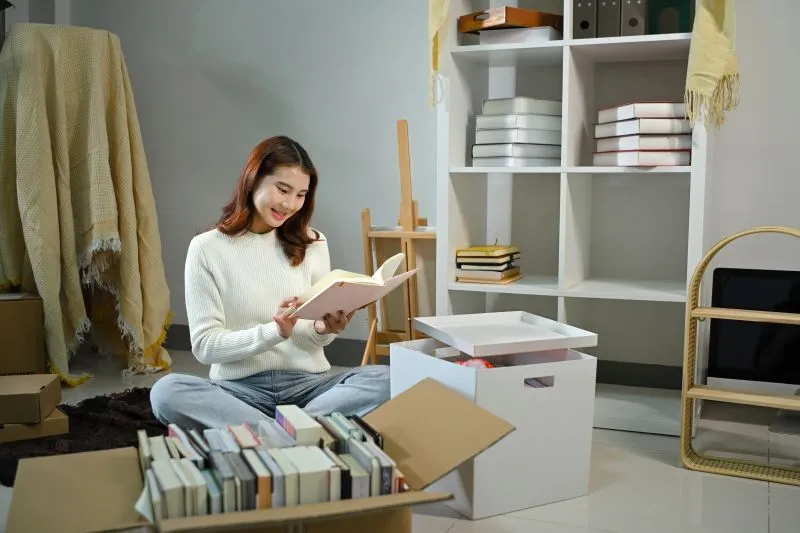
A few simple organisation tools will save a surprising amount of time on both packing and unpacking day:
- Permanent marker: For labelling boxes with contents, room destination, and handling notes.
- Sticky labels or coloured tape: Colour-coding by room makes loading and unloading much faster.
- Inventory list: Even a basic note on your phone helps confirm everything arrived and locate specific boxes quickly.
- Fragile stickers: Essential for any box containing valuable or antique books — mark at least two sides.
Step-by-Step Guide to Packing Books for Moving House
Now that the materials are ready, here's how to pack books for moving house in a way that's efficient, safe, and easy to undo at the other end. Follow these four steps in order.
Step 1: Sort Your Books
Pull everything off the shelves and divide your books into clear categories:
- Keep: Books you genuinely use, love, or plan to read.
- Donate or sell: Books in good condition that you haven't opened in years.
- Recycle or discard: Damaged, mouldy, or incomplete books that aren't worth transporting.
- Set aside for special packing: Antique, valuable, or oversized books that need individual treatment.
Within the 'keep' pile, group by size — hardcovers together, paperbacks together, oversized volumes separately. Similar sizes pack far more efficiently.
Step 2: Protect Your Books
Decide how much protection each book needs before it goes in a box:
- Everyday books: No individual wrapping needed — careful packing position is enough.
- Books with dust jackets: Wrap loosely in packing paper to prevent scuffing. Fold in the edges neatly.
- Valuable or antique books: Wrap individually in acid-free tissue paper first, then in a layer of bubble wrap.
- Rare books: Photograph each one before packing for insurance records and condition confirmation.
Step 3: Pack Books in Boxes
This is where most people go wrong. When learning how to pack books in boxes for moving, positioning matters. Use the table below as a quick reference guide:
- Best For: Hardcovers — spine absorbs pressure from below
- What to Avoid:
- Don't use for very tall stacks — top books may tip
- Best For: Paperbacks and thin books, especially at the box base
- What to Avoid:
- Never stack too high — adds excess weight
- Best For: A single, even row of books the same height
- What to Avoid:
- Avoid mixing sizes — uneven spines buckle
- Best For: — Not recommended —
- What to Avoid:
- Stresses the binding and risks permanent damage

Additional packing rules for each box:
- Heaviest books always go at the bottom, lightest on top
- Keep each box under 15 kg (around 33 lbs) — if it's a strain to lift, it's too heavy
- Mix hardcovers and paperbacks only when they are the same size and depth
Knowing how to pack book boxes for moving is mainly about weight distribution and protecting book spines. Get those two things right, and the rest follows naturally.
Step 4: Fill Gaps and Secure the Books
Once books are packed, complete the box using this checklist:
- Press lightly on the top of the contents — if books shift, fill gaps with crumpled packing paper, a folded towel, or foam padding.
- Books should feel snug but not forced — nothing should move, but nothing should be bent either.
- Seal the top with at least two strips of tape across the seam, then run a strip down each side edge for extra hold.
- Label each box: contents (or category), destination room, and handling notes.
- Add a FRAGILE sticker on at least two sides if the box contains anything valuable or delicate.
Tips for Packing Large and Special Books
Not all books fit neatly into a standard small box. Oversized volumes and antique or collectible books need a slightly different approach to arrive safely.
Packing Large and Oversized Books
Large coffee table books, art books, and atlases don't respond well to being stood upright or jammed in with regular-sized books. Handle them like this:
- Lay flat in a box — one at a time or in small stacks of the same dimensions
- Place lighter, smaller items on top — never heavy books on top of large ones
- Use a medium box if needed, but resist the temptation to fill it completely
- If the book is too large for any box, wrap it securely in bubble wrap and tape it as a standalone item
Packing Valuable or Antique Books
Rare and collectible books need careful handling at every stage. Follow these steps:
- Photograph each valuable book before packing — both covers and any visible damage — for insurance records.
- Wrap individually in acid-free tissue paper. This prevents moisture and avoids chemical reactions with regular paper.
- Add a layer of bubble wrap around the tissue paper for physical protection during transit.
- Pack in a dedicated, clearly labelled box — not mixed in with general books.
- Consider travelling with this box in your car rather than the removal van to maintain full control over it.
- For very large or rare collections, contact a specialist removal company experienced in handling archival materials.
Conclusion: The Importance of Proper Packing and Unpacking
Getting your books from one home to another really does come down to a handful of good habits. Knowing how to pack books for moving well means using the right boxes, the right positioning, and the right amount of padding — none of which is complicated once you know what you're doing.
Here's a quick summary checklist before you start:
- Sort books into keep, donate/sell, discard, and special-packing piles
- Gather small double-walled boxes, packing tape, packing paper, bubble wrap, and padding
- Pack the heaviest books at the bottom, spine-down or flat, lightest on top
- Keep boxes under 15 kg and fill all gaps before sealing
- Label every box with contents, room, and any fragile notices
- Pack valuable books separately with acid-free wrapping and keep them close during the move
Understanding how to pack book boxes for moving well also makes unpacking far less painful. When boxes are labelled by category and room, shelves go up quickly instead of turning into a three-hour treasure hunt through identical-looking cardboard boxes.
Moving is stressful enough without your favourite books arriving bent or your boxes splitting on the stairs. A bit of preparation at the packing stage pays off in a smoother moving day and a new home where everything ends up exactly where it belongs.
Take your time with it, follow the steps outlined here, and your books should arrive in exactly the same condition they left — ready to fill new shelves in a new space.

.webp)