How to Choose a Storage Unit: 7 Key Factors to Consider
With that many options available, choosing the right storage unit is far from straightforward. The wrong choice can mean paying for space you don't use, storing temperature-sensitive items in a standard unit, or renting from a facility with inadequate security.
Whether you are moving, downsizing, decluttering, or managing business inventory, the storage unit you choose has a direct impact on whether your belongings stay safe, accessible, and in good condition.
This guide covers the 7 key factors to consider when choosing a storage unit, so you can make a confident, informed decision the first time around.
What Is a Storage Unit?
A storage unit is a rentable space used to store personal, business, or other belongings on a short-term or long-term basis. Facilities typically offer a range of unit sizes, access options, and environmental controls to suit different storage needs.
The main types available include:
- Self-storage units: Individual lockable rooms within a larger facility, ranging from small lockers to garage-sized spaces. The most common option for household and business use.
- Climate-controlled units: Temperature and humidity-regulated spaces designed for sensitive items such as electronics, artwork, wood furniture, documents, and musical instruments.
- Drive-up units: Ground-floor units accessible directly from your vehicle, making loading and unloading faster and easier for heavy or bulky items.
- Vehicle storage: Covered or uncovered parking spaces for cars, motorcycles, boats, and RVs.
- Portable storage (PODS): Containers delivered to your location for loading, then transported to a facility or your new address.
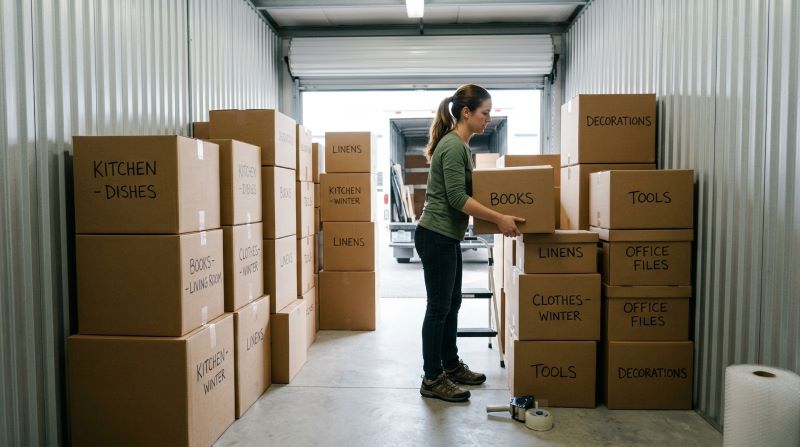
About 11% of U.S. households currently rent a storage unit, with moving being one of the top drivers. Storage units serve individuals navigating life transitions, businesses managing overflow inventory, students, and military families alike.
7 Key Factors to Consider When Choosing a Storage Unit
Factor 1: Size of the Storage Unit
Choosing the right size is the single most important factor in choosing the right storage unit. Rent a unit that's too small and your items won't fit safely. Rent one that's too large, and you pay for empty space every month.
Most facilities offer units in standard increments. Here's a general reference for how size maps to typical storage needs:
A practical sizing tip: list every major item you plan to store before visiting a facility. Most storage companies offer online size calculators that estimate required space based on item type and quantity. When in doubt, choose the next size up. The cost difference between adjacent sizes is usually small, and the flexibility of extra space is worth it.
Factor 2: Location of the Storage Unit
How far the facility is from your home or office matters more than most people realize when signing up, and considerably more once they're making regular visits.
A unit that's conveniently located near major roads saves time and reduces the friction of accessing your belongings. If you're using storage during a move, a facility close to either your old or new address simplifies the logistics significantly.
Key location factors to evaluate:
- Distance from your home, office, or new address
- Access to major roads or highways for easy routing with a loaded vehicle
- On-site parking: Is there enough space for a moving truck or trailer?
- Whether the facility is in a well-lit, well-maintained area
If you'll be accessing the unit frequently, a central location is worth a modest premium. If you're storing long-term with infrequent access, a facility slightly further out may offer better rates for equivalent quality.
Factor 3: Security and Safety Features
A storage unit is only as useful as its ability to keep your belongings safe. Security standards vary significantly between facilities, and knowing what to look for prevents a costly mistake.
When visiting a facility, look for:
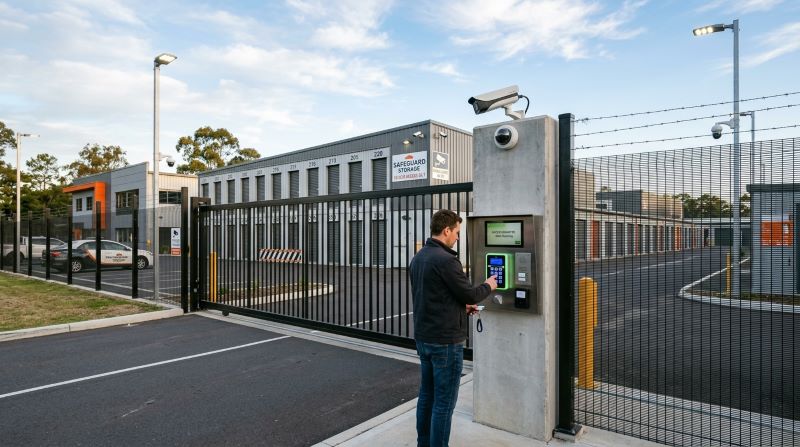
- 24/7 video surveillance with cameras covering entrances, hallways, and the perimeter
- Individual unit alarms that trigger if a specific unit is accessed without authorization
- Electronic gate access using PIN codes or key cards rather than simple padlocks at the entrance
- Adequate exterior lighting throughout the facility, including loading areas
- On-site staff or management during operating hours
- Perimeter fencing in good condition
Ask the facility directly how long surveillance footage is retained and whether an on-site manager is present daily. These two questions quickly reveal how seriously a facility takes security. A well-run operation answers them without hesitation.
Factor 4: Climate Control
Standard storage units are not temperature-regulated. In most U.S. climates, that means summer heat exceeding 100°F inside the unit, winter lows that can drop below freezing, and humidity fluctuations that accelerate deterioration in ways that aren't visible until the damage is done.
Climate-controlled units maintain temperatures between 55°F and 85°F year-round and manage humidity levels to prevent moisture buildup. They typically cost 25% to 50% more per month than standard units, and for many items, that premium is easily justified.
Items that require a climate-controlled unit:
- Electronics and computers
- Wood furniture (warping, cracking)
- Artwork, photographs, and framed pieces
- Musical instruments, including pianos
- Wine and collectibles
- Important documents, books, and files
- Clothing stored long-term (mold, mildew)
- Antiques and heirlooms
If you're storing items for less than a month in mild weather, a standard unit may be adequate. For anything longer, or anything with genuine monetary or sentimental value, climate control is the safer default. BoxStar Movers offers climate-controlled storage options designed for both short-term and long-term needs.
Factor 5: Access Hours and Convenience
The best storage unit in terms of price, size, and security is frustrating to use if you can't access it when you need it.
Facilities vary widely in access:
- 24/7 access: Full flexibility to retrieve or add items at any hour. Ideal for business users or anyone with an unpredictable schedule.
- Extended hours (typically 6 am to 10 pm): Covers most practical needs for personal storage users.
- Business hours only (9 am to 6 pm weekdays): Common at older or smaller facilities. A real limitation if you work standard hours.
Beyond hours, evaluate the physical convenience of the facility:
- Drive-up units eliminate the need to carry items through hallways or use elevators
- Wide aisles allow moving trucks and large vehicles to maneuver easily
- Ground-floor units simplify loading for heavy or bulky items
- On-site dollies and carts, available at better facilities, reduce the physical effort of moving items in and out
If you'll be visiting regularly, access hours and physical layout deserve as much attention as price.
Factor 6: Costs and Payment Plans
Storage unit pricing is driven by size, location, climate control, and local market demand. The national average monthly cost for a storage unit is around $85 to $96, though rates vary substantially by market and unit type.
What to budget for beyond the base monthly rate:
- Administrative or setup fees: One-time charges common at many facilities, typically $15 to $30
- Lock fee or purchase: Some facilities require their own lock, adding $10 to $25 upfront
- Insurance: Most facilities require proof of coverage or offer their own policy at $10 to $20 per month
- Late fees: Often steep, commonly 10% to 20% of the monthly rate if payment is overdue
- Rate increases: Month-to-month leases allow facilities to raise rates, sometimes with 30 days' notice
Ask for a complete fee breakdown in writing before signing. Also ask whether the advertised rate is a promotional first-month price and what the standard rate becomes afterward. Comparing the total cost over three months is a more accurate comparison than comparing headline monthly prices.
Factor 7: Customer Service and Reputation
The quality of a storage facility's staff and management directly affects your experience from the first inquiry through your last day of rental. Unhelpful or unresponsive staff make a real difference when you have an access issue, need to adjust your unit size, or have a billing dispute.
How to assess reputation before you commit:
- Search for the facility on Google, Yelp, and the Better Business Bureau. Look at the overall rating and read recent reviews. Patterns in negative feedback (billing surprises, poor security, unhelpful staff) are more informative than a single complaint.
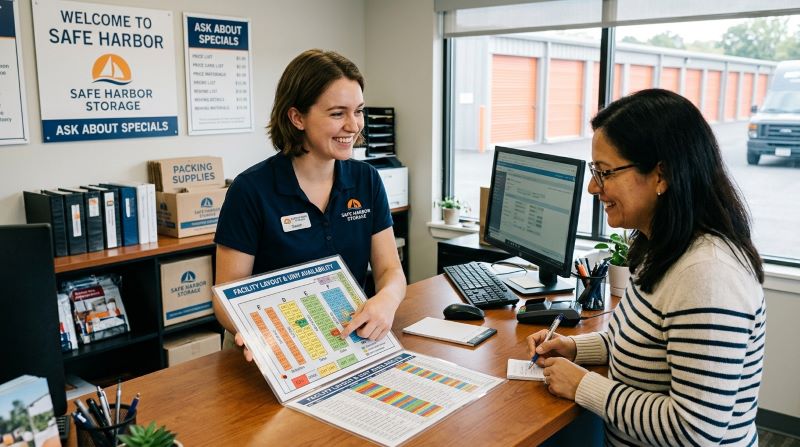
- Call or visit the facility before signing. How quickly they respond and how clearly they answer your questions tells you a great deal about day-to-day operations.
- Ask how long the facility has been operating and whether ownership or management has changed recently. Established facilities with consistent management tend to maintain higher standards.
- Ask about their process if something goes wrong: what happens if there's a break-in, a water leak, or a billing dispute?
A facility with strong reviews and attentive staff is worth paying a small premium for. Poor customer service compounds every other problem.
How to Apply These 7 Factors and Make the Right Decision
Knowing how to choose a storage unit comes down to matching these seven factors to your specific situation, not optimizing each one in isolation.
Start with size and duration. If you're storing long-term with valuable items, climate control is non-negotiable. If you need regular access, prioritize location and hours. If you're storing for a short period during a move, a facility with drive-up access and proximity to your new address is often the most practical choice.
These factors apply equally whether this is your first time renting a unit or you're an experienced storage user looking to switch facilities. The right unit for a one-month move-in gap looks different from the right unit for a three-year business inventory solution, and using this framework helps you separate what matters for your situation from what doesn't.
BoxStar Movers pairs professional long-distance moving services with storage options that keep your belongings with the same trusted team from pickup through delivery. If you're also considering white-glove moving or office moving services, combining your move and storage needs with a single provider simplifies both the logistics and the coordination.
Need storage as part of your move?
BoxStar Movers offers flexible storage solutions alongside full-service moving. Get a transparent, no-hidden-fees quote today.
Frequently Asked Questions
How do I choose the right storage unit size?
List every item you plan to store and use the facility's online size calculator as a starting point. A 10x10 unit covers most one-bedroom apartment contents. A 10x20 fits a three to four-bedroom home. If you're between sizes, choose the larger one. The cost difference is usually small, and the extra space prevents damage from overcrowding.
What should I store in a climate-controlled unit?
Any item sensitive to temperature or humidity benefits from climate control: electronics, wood furniture, artwork, musical instruments, important documents, wine, clothing stored long-term, and antiques. For items you plan to store for more than a month or through an extreme weather season, climate control is the safer default.
How do I pack my storage unit efficiently to maximize space?
Place large, heavy items like furniture and appliances at the back and along the walls. Stack boxes from floor to ceiling with heavier boxes at the bottom. Leave a center aisle for access. Disassemble furniture where possible. Label every box on the side facing the aisle so you can find items without moving everything.
Are there hidden fees when renting a storage unit?
Yes, common ones include administrative setup fees, lock purchase requirements, mandatory insurance, and late payment fees. Some facilities also offer a promotional first-month rate that increases significantly from month two. Always ask for a complete written fee breakdown before signing, and confirm what the standard ongoing rate is after any promotions.
Do I need insurance for my items when renting a storage unit?
Most facilities require proof of insurance or offer their own coverage as a rental condition. Your homeowner's or renter's insurance policy may extend to items in storage. Check your policy or call your provider before signing up for the facility's plan. For high-value items, confirm the coverage limit and whether a separate rider is needed.

.webp)