How to Pack Dishes for Moving? 5 Simple Rules to Keep Your Plates Safe
July 1, 2026
July 1, 2026
According to an analysis of FMCSA's National Consumer Complaint Database by the U.S. Moving Protection Organization, a nonprofit consumer protection group, damaged or lost items account for roughly one-third of all complaints filed against household goods movers, making breakage one of the most common problems in any relocation.
Dishes are disproportionately represented in that figure. Plates, bowls, mugs, and glassware are dense, rigid, and unforgiving on impact. One wrong step, one unwrapped edge, one box packed too loosely, and years of dinnerware can be reduced to a box of shards in a single bump during loading. The good news is that packing dishes for moving correctly is straightforward once you know the right sequence.
These 5 simple rules cover everything from box selection to the final label.
What Supplies Do You Need Before Packing Dishes?
Gather everything before you start so you're not improvising mid-pack. The essential supply list:
- Small or medium moving boxes (never large boxes for dishes)
- Packing paper (plain, ink-free)
- Bubble wrap for extra-fragile or thin glass pieces
- Strong packing tape
- A permanent marker
- Towels or soft linens as supplemental cushioning
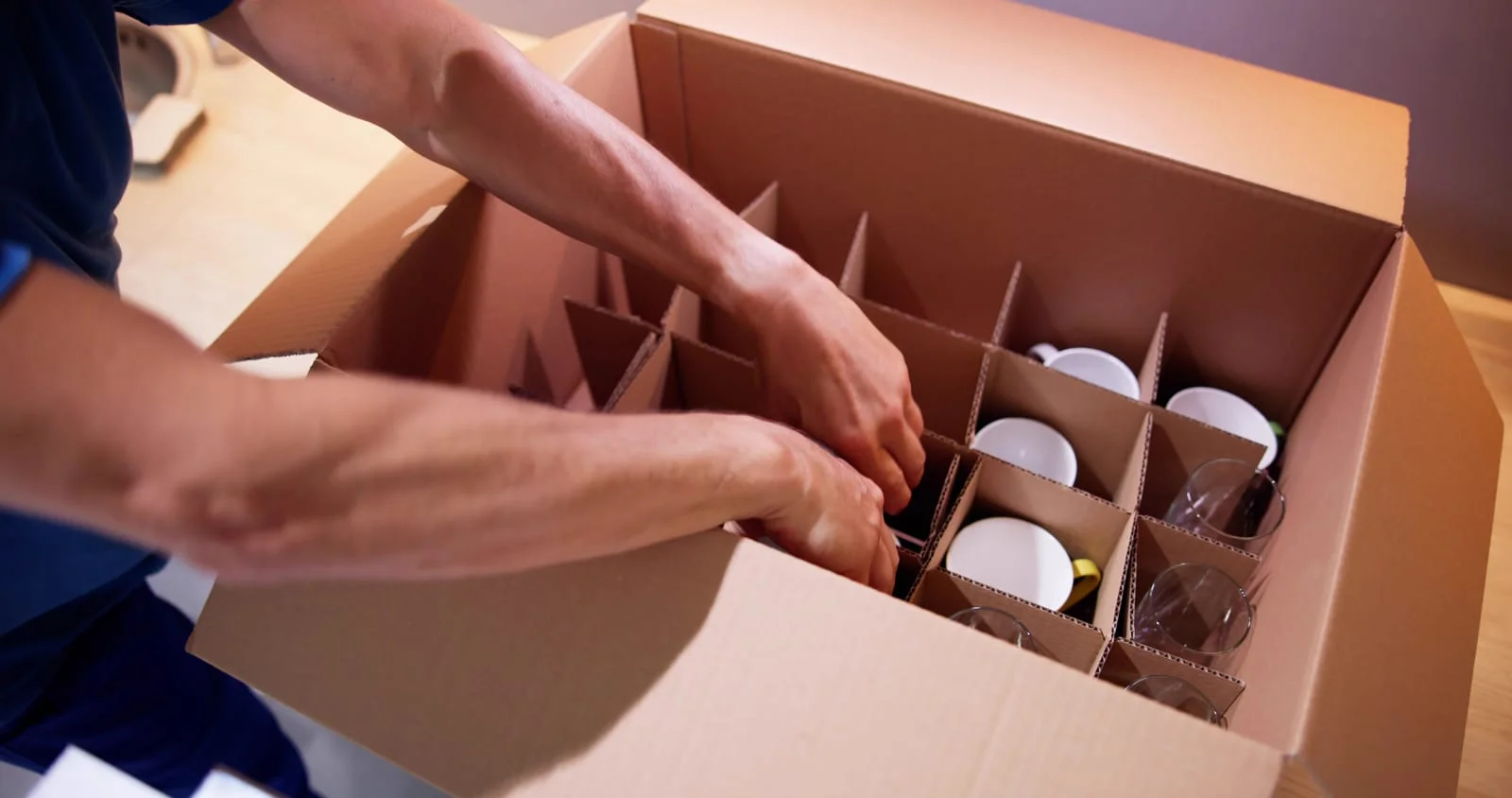
- Cardboard dividers, optional but useful for stemware and mugs
Box strength matters more for dishes than almost any other household category. Dishes become heavy quickly: a single medium box of plates and bowls can weigh 30 to 40 pounds once full. A box that isn't built for that weight will bow, weaken, or split open mid-carry, and once a box fails structurally, everything inside it is at risk, regardless of how well it was wrapped.
What Are the 5 Simple Rules for Packing Dishes for Moving?
Rule 1: Use Small, Strong Boxes
Dishes should never go in large boxes. A large box filled with dishes becomes too heavy to lift safely, and the temptation to under-fill it leaves space for shifting, which is its own breakage risk.
Small or medium double-wall boxes are the right size for dinnerware. They keep total weight manageable, they're easier to carry without strain, and they're significantly less likely to break open mid-move than an oversized box loaded past its structural capacity.
Reinforce the bottom of every dish box with extra tape before you pack anything. Run at least two strips of tape along the center seam and one along each edge, forming an H pattern on the bottom. This prevents the most common box failure: the bottom seam splitting open from weight while the box is being carried or stacked.
Rule 2: Add Cushioning Before You Pack Anything
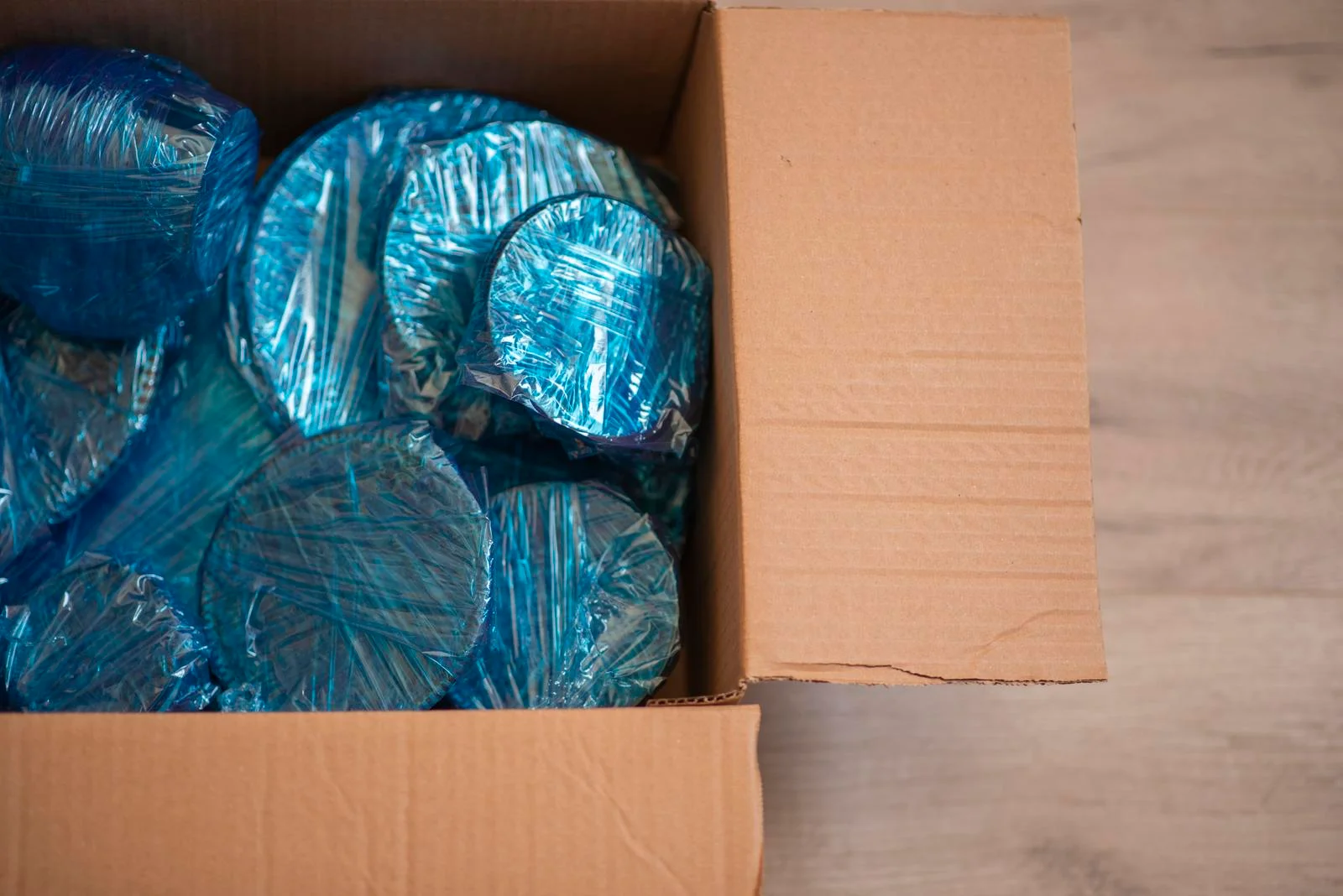
The bottom of an empty dish box should never go directly against your plates. Before placing a single item inside, build a cushioning layer using crumpled packing paper, a folded towel, or a few inches of bubble wrap.
This base layer absorbs impact every time the box is set down, lifted, or jostled during loading. Without it, the dishes at the bottom of the box bear the full force of every bump directly against bare cardboard, which is one of the most common and most preventable causes of cracked plates at the bottom of a stack.
Rule 3: Wrap Every Dish Separately
This is the step most people rush, and it's the one that matters most. How to pack dishes correctly comes down to individual attention for every single piece, not a quick group wrap.
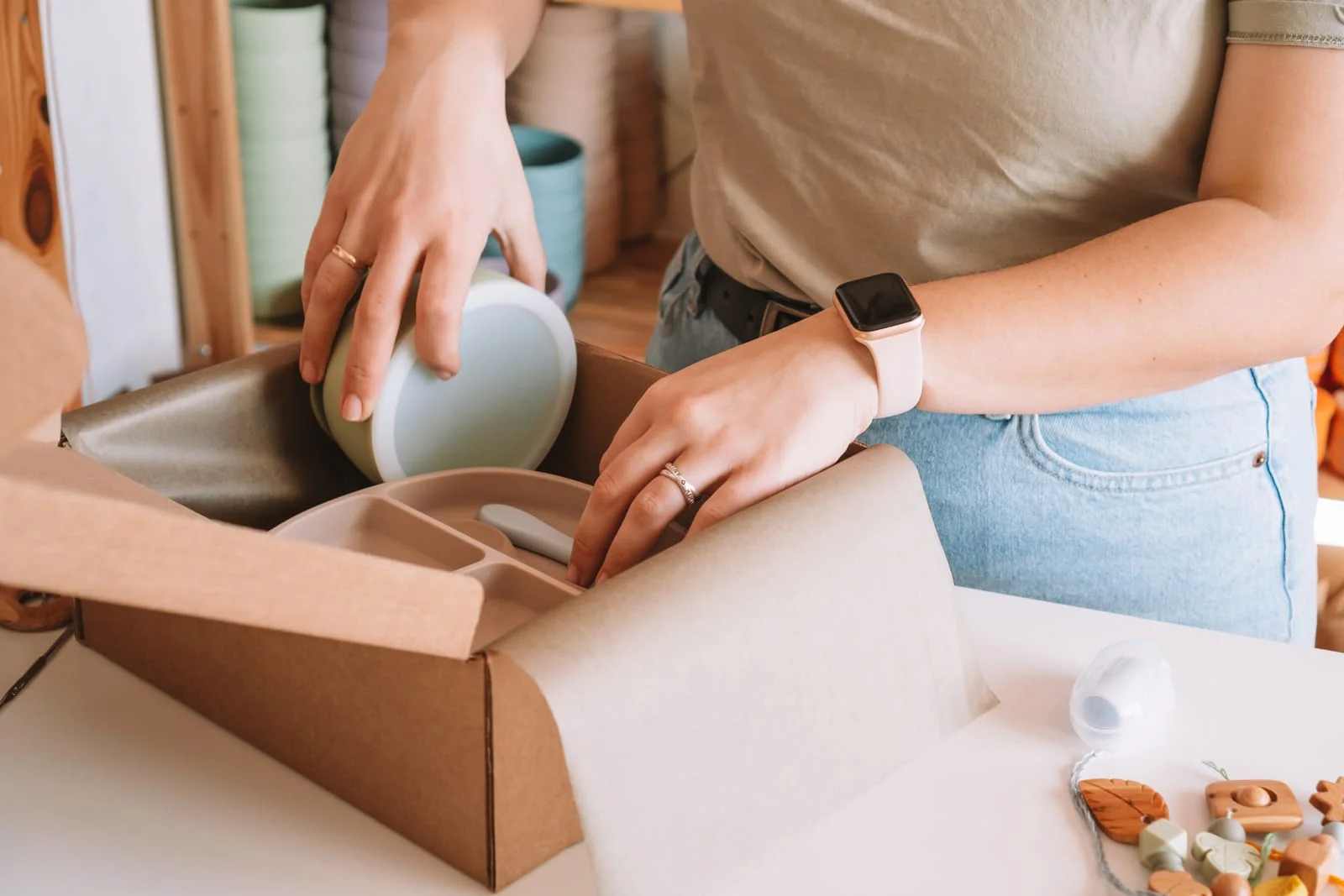
The correct wrapping process for each dish type:
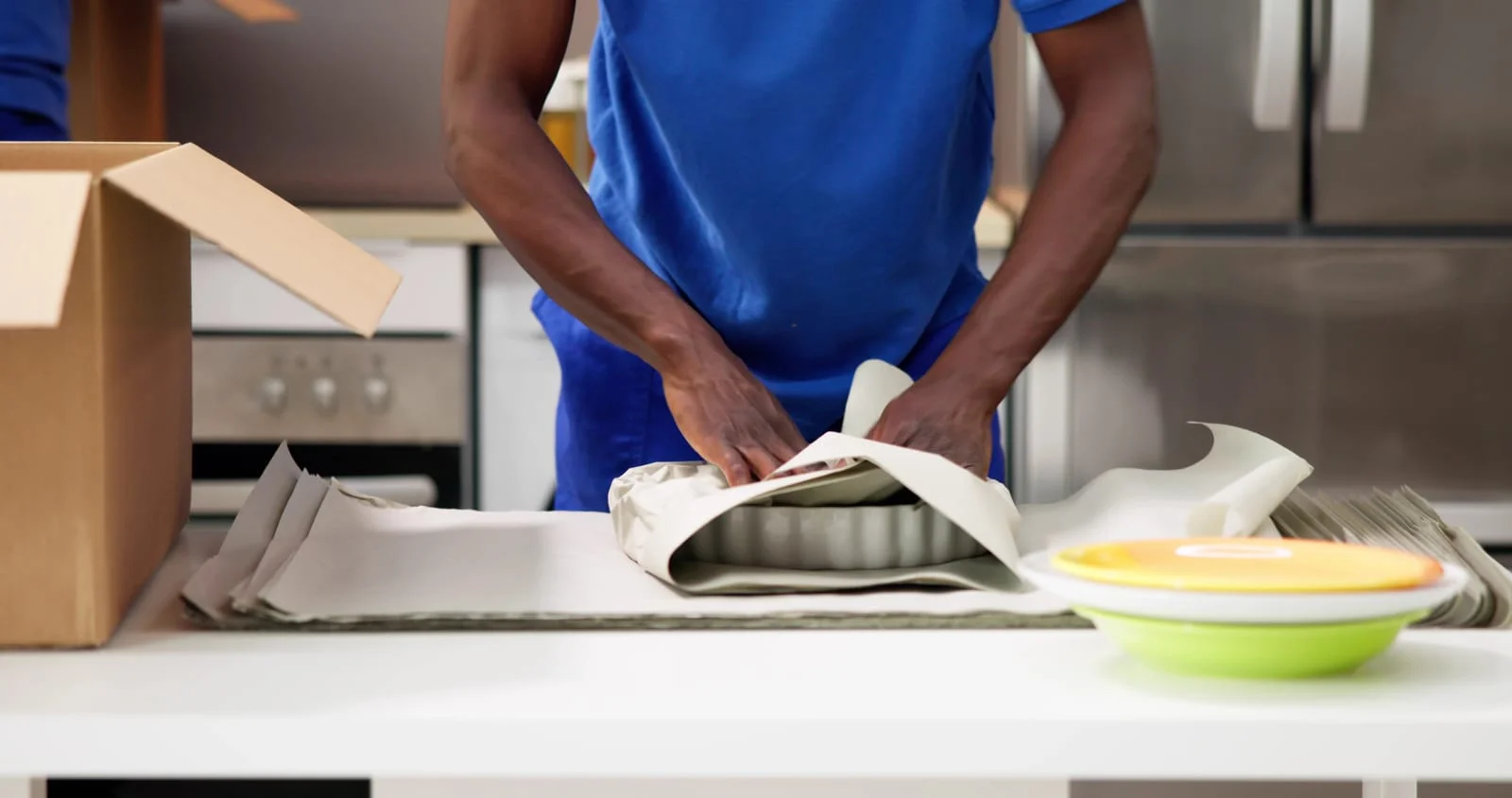
- Plates and bowls: Place each one in the center of a sheet of packing paper, fold the corners in toward the middle, and tuck or tape the final flap. Use two layers of paper for delicate china or any plate with a raised edge or pattern.
- Mugs and cups: Wrap the body first, then add a separate pad of crumpled paper or bubble wrap around the handle, which is the most fragile point and breaks first under pressure.
- Glassware and stemware: Wrap in bubble wrap rather than paper alone. Pay extra attention to the rim and the base, which are thin and prone to chipping. Place wrapped glasses upright, never on their side.
- Bowls: Nest no more than two or three wrapped bowls together, with paper between each layer, and never stack more than that without a divider.
The table below summarizes the right material and technique for each dish type:
Handles, rims, and thin glass edges need a second layer of protection beyond the general wrap. These are the points that contact other items first during any movement inside the box, and they are also the points most likely to chip or snap under pressure.
Rule 4: Pack Plates Vertically, Not Flat
Plates should stand on their edge inside the box, like records in a crate, rather than lying flat in a stack. This single change in orientation makes a significant difference in how plates handle pressure and impact during transport.
Plates stacked flat distribute weight unevenly across the stack, and the plates at the bottom bear the full weight of everything above them. A flat stack also transmits any impact directly through the stack, since each plate sits rigid against the next with little ability to absorb shock. Plates packed vertically distribute pressure along their edge, which is structurally stronger, and a slight jolt is far less likely to crack the full stack the way it would a flat one.
Pack plates of similar size together, standing upright, with a folded towel or extra packing paper between each one and at both ends of the row to prevent them from sliding side to side inside the box.
Rule 5: Fill Gaps and Label the Box Clearly
Empty space inside a box is the enemy of fragile items. Any gap allows dishes to shift during transport, and shifting items inside a box is one of the most common causes of breakage even when each individual item was wrapped correctly.
Before sealing the box, fill every remaining gap with crumpled packing paper, a folded towel, or bubble wrap until nothing moves when you gently shake the box. Test this before taping it closed. If you hear or feel movement, add more cushioning.
Once sealed, label the box clearly on at least two adjacent sides:
- Write "Fragile, Kitchen" in large letters.
- Add "This Side Up" with an arrow indicating the correct orientation.
- Note the destination room if it differs from the kitchen, such as a dining room hutch.
A box that's only labeled on top loses that information the moment it's stacked under something else, which is exactly when careful handling matters most.
How These 5 Rules Work Together to Protect Your Dishes
Packing dishes for moving is mostly about using the right box, wrapping each item individually, preventing any movement inside the box, and labeling clearly so handlers know to take care. Skip any one of these steps, and the others can't fully compensate. A perfectly wrapped plate in an underfilled, unlabeled box is still at risk. A well-cushioned box with unwrapped dishes inside is still at risk.
Follow the rules in order: strong small boxes, a cushioned base, individually wrapped pieces, vertical orientation for plates, and gaps filled before sealing. For large kitchens, especially fragile dishware, or any long-distance move where transit time is measured in days, professional packing help removes the guesswork.
BoxStar Movers' professional packing services use the materials and techniques that keep dishware intact, and their long-distance moving services ensure those boxes are loaded and secured properly for the full journey.
Moving soon and worried about your dishes?
BoxStar Movers offers professional packing with the right materials and techniques to protect your kitchen.