How to Move a Gun Safe: Safe and Professional Moving Methods

Rassul Yeshpayev
December 3, 2025
Rassul Yeshpayev
December 3, 2025
Moving a gun safe is very different from moving standard furniture. Its extreme weight, compact shape, and uneven balance make it one of the most dangerous items to relocate improperly. Many injuries and property damages occur not because people underestimate the weight, but because they misunderstand how that weight behaves once the safe is in motion. Knowing how to move a gun safe safely—and when not to attempt it at all—is a matter of responsibility, not convenience.
What Makes Gun Safes Difficult to Move
Weight Distribution and Center of Gravity
Gun safes are designed to be heavy for a reason. Thick steel walls, reinforced doors, and locking mechanisms concentrate weight toward the front of the unit. This creates a forward-shifted center of gravity that can easily cause tipping if the safe is angled incorrectly.
Unlike large appliances, gun safes are often tall and narrow. This height-to-base ratio makes them unstable during movement, especially on stairs or uneven flooring. Even a small shift in angle can quickly become uncontrollable once momentum takes over.
Common Risks During Gun Safe Transport
The risks involved in gun safe relocation are not theoretical. Common issues include crushed fingers, back injuries, damaged staircases, and cracked flooring. A falling safe can cause severe structural damage and pose serious injury risks to anyone nearby.
Another often-overlooked risk is loss of control at transition points—door thresholds, ramps, and stair landings. These moments require precise handling and coordinated movement, which is difficult without experience or specialized tools.
Preparing a Gun Safe for Relocation
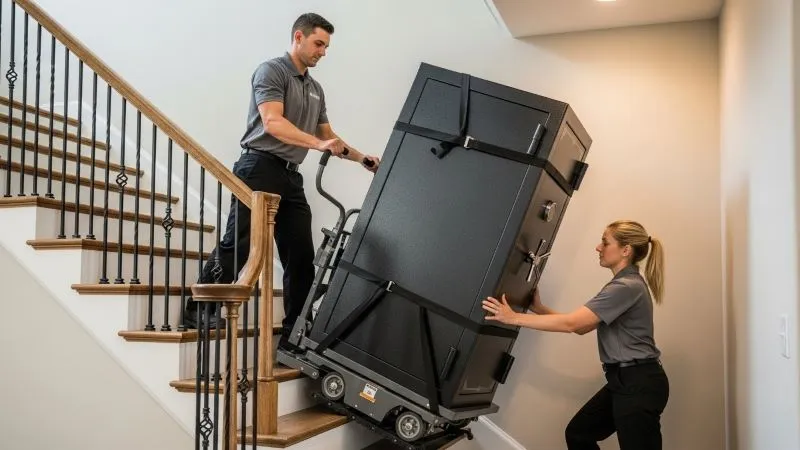
Preparation determines whether moving a gun safe is controlled or dangerous. Because of extreme weight and a forward-heavy design, even small mistakes at this stage can lead to injuries or serious property damage. Before lifting or rolling the safe, both the unit itself and the surrounding environment must be carefully prepared. This step is essential regardless of whether you are planning a DIY move or evaluating the best way to move a gun safe safely.
Emptying and Securing the Safe
Before any attempt to move a gun safe, it must be completely emptied. Firearms, ammunition, documents, shelves, and any removable interior components should be taken out and packed separately. While removing contents does not significantly reduce the overall weight, it eliminates internal movement that can destabilize the safe during transport.
Loose items inside the safe can shift when the unit is tilted, changing the center of gravity without warning. This sudden imbalance is one of the most common reasons people lose control when trying to determine how to move a gun safe on their own.
Key preparation steps for the safe itself include:
- Removing all contents, including shelves and brackets
- Checking the interior to ensure nothing remains loose
- Locking the door fully before any movement
- Securing the door with straps or braces, if possible
The door deserves special attention. Gun safe doors are often the heaviest part of the unit. Even slight movement during transport can pull the safe forward unexpectedly. Locking and stabilizing the door ensures that the weight remains evenly distributed throughout the move.
Protecting Floors, Walls, and Doorways
Gun safes apply extreme pressure to small surface areas, making environmental protection just as important as securing the safe. Hardwood floors, tile, laminate, and staircases are particularly vulnerable to cracking, compression, or permanent dents under concentrated weight.
Before moving the safe, the entire travel path should be reinforced. Common protective measures include:
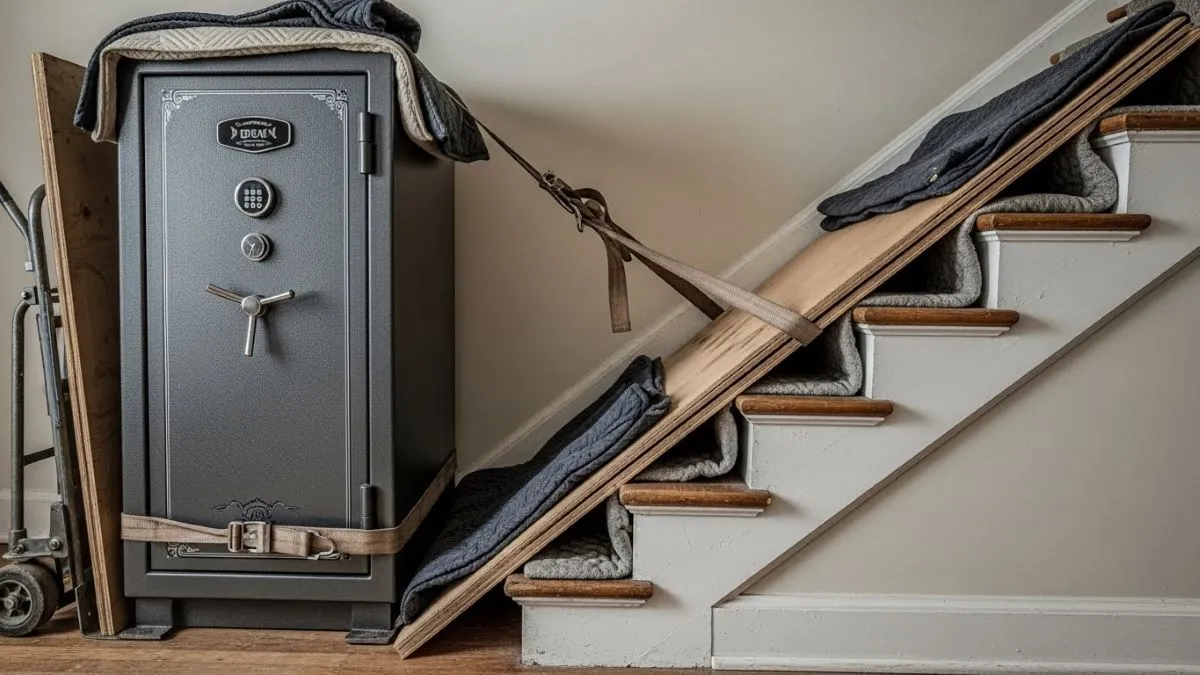
- Laying plywood sheets to distribute weight across the flooring
- Using heavy-duty mats or moving blankets to reduce friction
- Padding walls, corners, and door frames to prevent impact damage
Doorways and hallways require careful measurement in advance. Clearance should account not only for width, but also for height and turning angles. Tight spaces increase the likelihood of scraping walls or forcing awkward tilts, which can cause sudden shifts in weight and loss of control.
Stairs and thresholds are especially high-risk areas. Even a small lip or uneven surface can interrupt movement and destabilize the safe. Planning how the safe will pass through these points is a critical part of identifying the best way to move a gun safe without unnecessary risk.
Thorough preparation does not eliminate the challenges of gun safe relocation, but it transforms the process from unpredictable to manageable. When the safe is secured and the environment is protected, the move becomes a matter of controlled execution rather than emergency reaction.
Methods Used to Move Gun Safes
Manual Techniques and Their Limitations
Some people attempt to move gun safes using basic tools like furniture dollies, straps, and brute force. While this may work for smaller safes over short distances, it carries significant risk. Manual techniques rely heavily on physical strength and coordination, both of which become unreliable under extreme load.
Stairs amplify these risks. Gravity works against control, and once a safe begins to slide or tip, stopping it without injury is extremely difficult.
Specialized Equipment and Tools
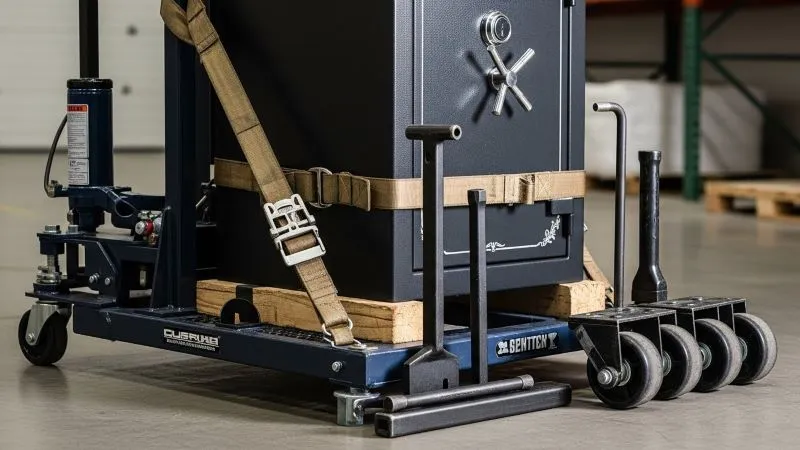
Professional safe moving relies on equipment designed to control weight rather than fight it. Stair-climbing dollies, hydraulic lift gates, and reinforced straps allow for gradual, controlled movement. These tools reduce strain on the body and provide stability during transitions.
Many established methods outlined in general moving safety practices emphasize control, leverage, and surface protection—principles that are especially critical when handling gun safes.
Professional Gun Safe Movers vs DIY Attempts
Safety and Liability Differences
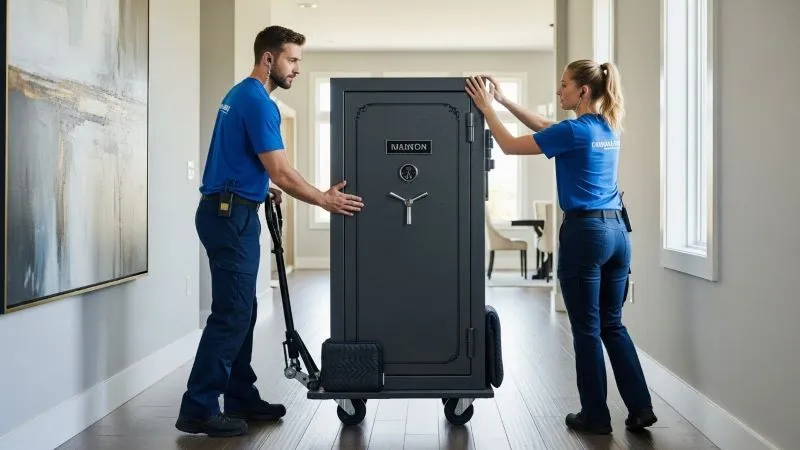
The difference between professional and DIY gun safe moving often comes down to risk management. Trained movers understand how to control balance, anticipate tipping points, and navigate confined spaces. They also carry insurance that covers potential damage or injury during the move.
Specialized services such as those used by a professional gun safe mover are structured around these risks, focusing on controlled transport rather than speed.
Cost vs Risk Comparison
DIY attempts may appear cheaper upfront, but the hidden costs can be substantial. Medical expenses, property repairs, and damaged safes quickly outweigh professional fees. Workplace safety research, including guidance referenced by the National Institute for Occupational Safety and Health, consistently highlights the dangers of improper handling of heavy loads.
When evaluating cost, it is important to consider not only money, but responsibility. Gun safes are designed to protect valuables and people. Moving them unsafely undermines that purpose.
Summary: Making the Right Decision for Gun Safe Moving
Moving a gun safe is not a standard relocation task. Its weight, balance, and potential hazards require careful planning and realistic judgment. While small safes on ground level may be manageable with preparation, many situations exceed what manual methods can handle safely.
Understanding how to move a gun safe means knowing your limits. In many cases, the safest and most responsible choice is to rely on professionals who are equipped to manage both the physical and structural risks involved.

.webp)